|
|
|
| Corrosion Behavior of 12Cr1MoVG Steel in a Simulated Flue Gas for High-chlorine Coal while Containing Different Forms of Chlorine |
GUO Feifan1, MA Jigang1, CHEN Lijuan1,2( ), XIE Weizhi1, WEI Bo1,2(), MA Rui3, AN Tiantian1, LI Yihua1, LI Xinyue1 |
1.School of Chemical Engineering, Xinjiang University, Urumqi 830017, China
2.Xinjiang Key Laboratory of Clean Coal Conversion and Chemical Processes, Urumqi 830017, China
3.School of Electrical Engineering, Xinjiang University, Urumqi 830017, China |
|
Cite this article:
GUO Feifan, MA Jigang, CHEN Lijuan, XIE Weizhi, WEI Bo, MA Rui, AN Tiantian, LI Yihua, LI Xinyue. Corrosion Behavior of 12Cr1MoVG Steel in a Simulated Flue Gas for High-chlorine Coal while Containing Different Forms of Chlorine. Chinese Journal of Materials Research, 2026, 40(9): 697-709.
|
|
|
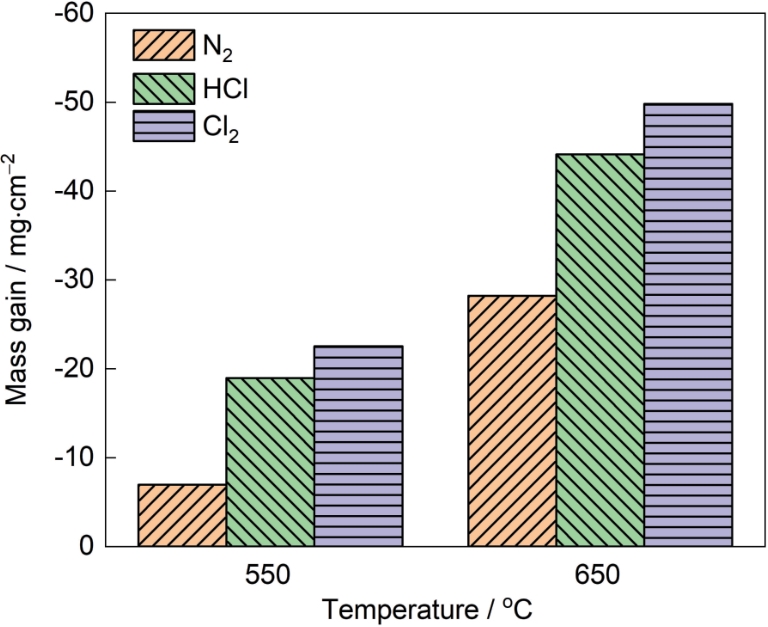
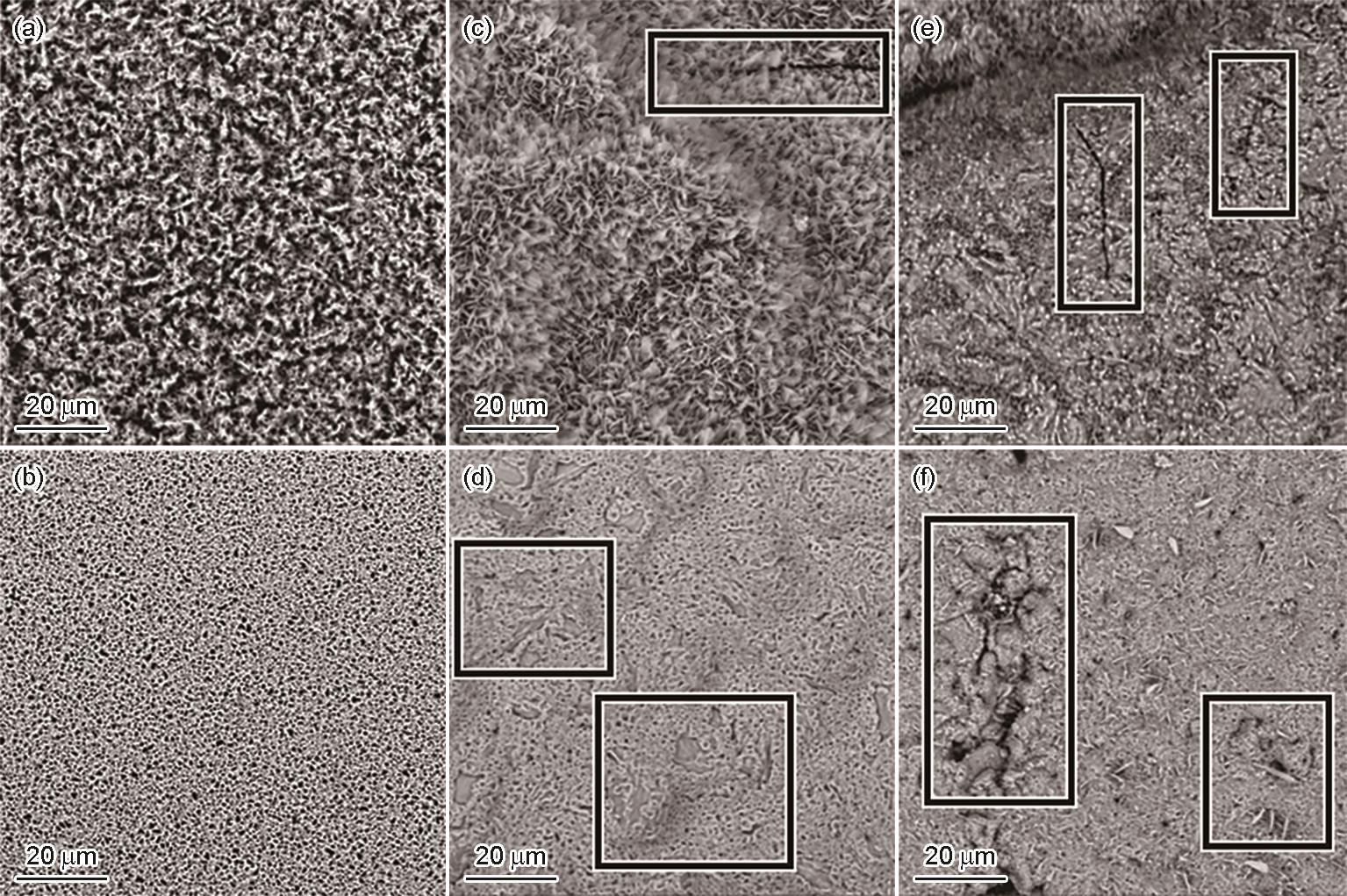
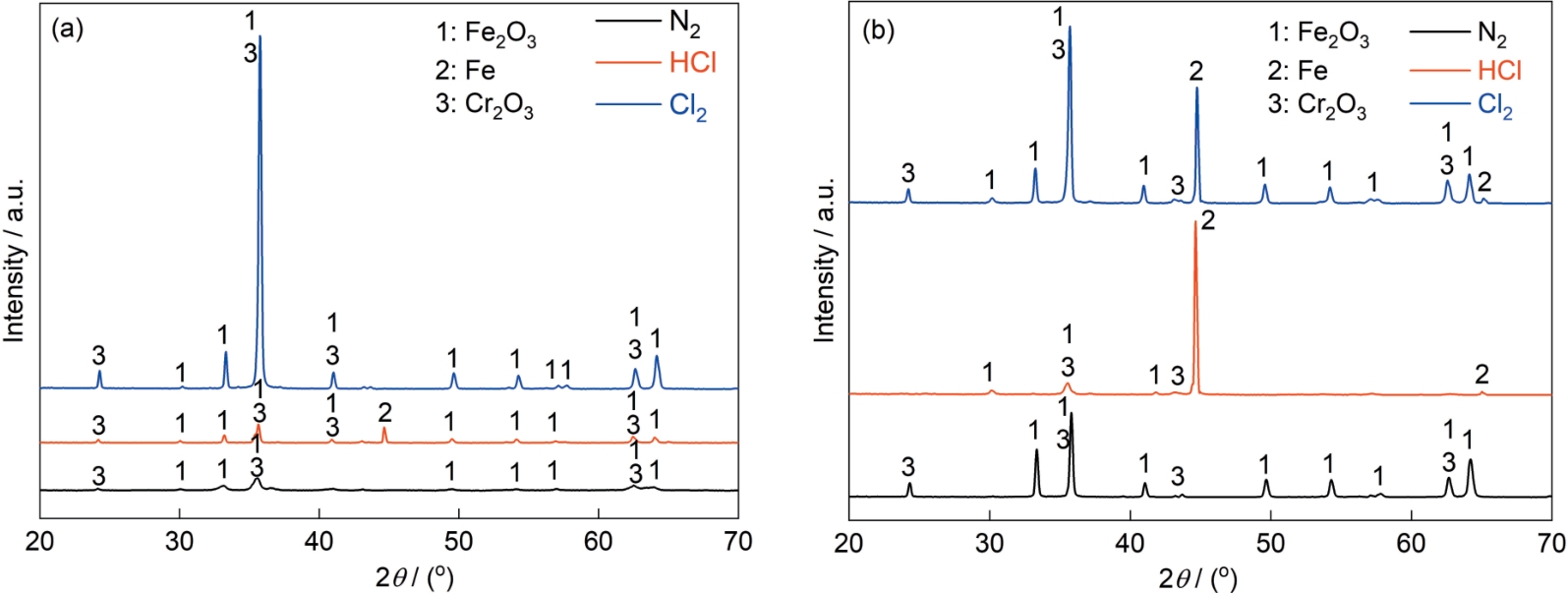
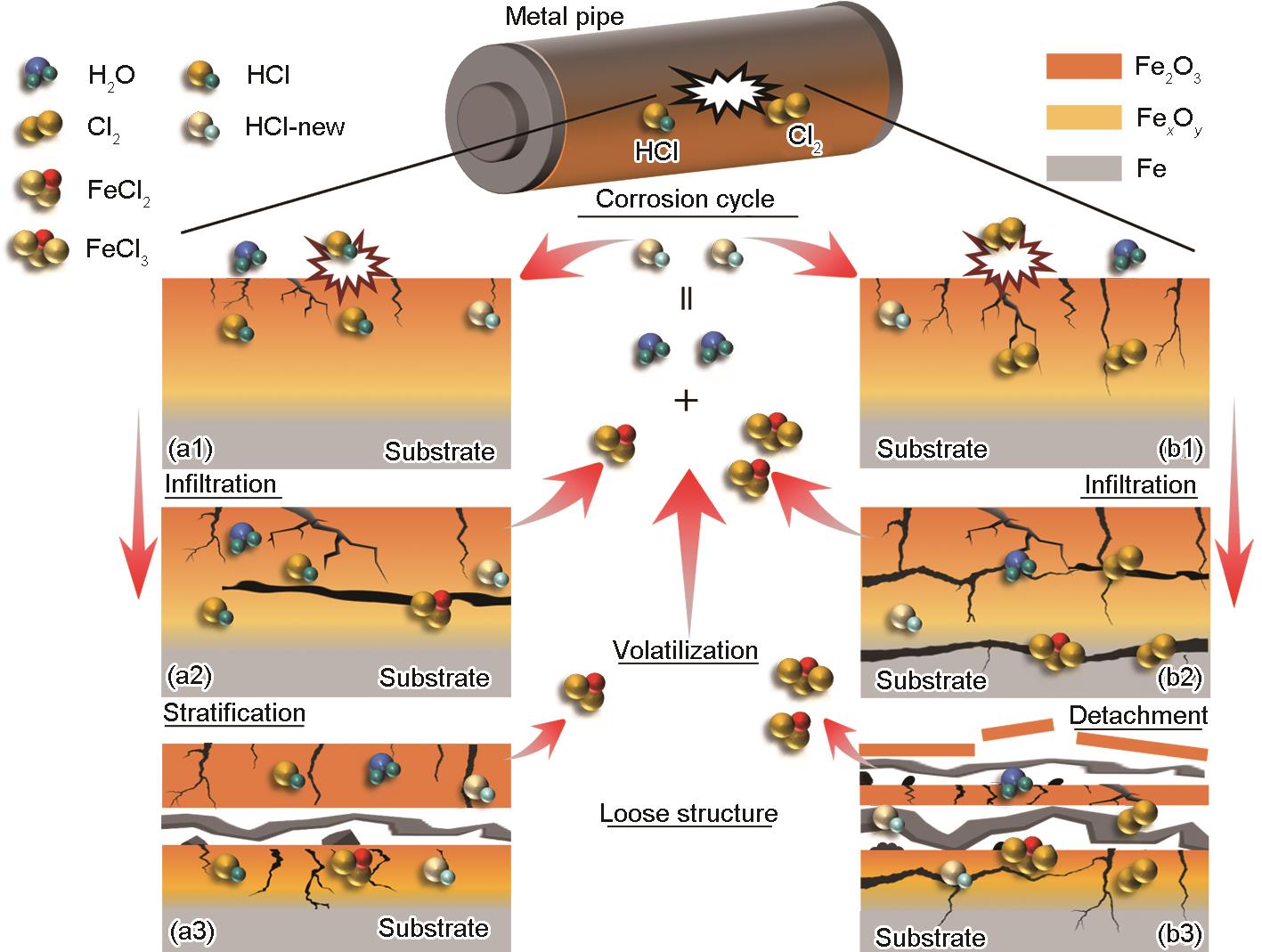
Abstract The flue gas generated from combustion of high-chlorine containing coals may induce severe corrosion on boiler heat exchanger tubes due to chlorine-containing species, significantly compromising the operational safety. Herein the high-temperature corrosion behavior of boiler steel 12Cr1MoVG was investigated in flue gas containing different chlorine species. For this purpose, a high-temperature corrosion test rig was established to simulate the flue gas environment (Cl2/HCl + CO2 + H2O + N2, 550 oC/650 oC) in boilers firing high-chlorine coal while containing different forms of chlorine. The corrosion behavior of the steel was characterized by means of mass loss measurement, SEM-EDS, XRD, and thermodynamic calculations. The results revealed that temperature significantly influences material corrosion. When temperature increased from 550 oC to 650 oC, oxide scale thickness increased by 232.4 µm with a corresponding mass loss increase of 21.26 mg/cm2. Microcracks developed in the surface oxide scale due to thermal stress. Under identical conditions, Cl2 induced more severe corrosion than HCl. When the corrosion of steel in artificial flue gas containing HCl may generate volatile FeCl2, whose sublimation created porous pathways allowing HCl penetration through the oxide scale to react with the steel substrate, simultaneously inducing transverse and longitudinal cracks. In contrast, when exposure to ones containing Cl2 the steel corrosion could induce the formation of FeCl3, which volatilizes at lower temperatures, producing dense porosity that facilitated inward chlorine diffusion and subsequent reaction with the steel substrate, ultimately causing severe oxide scale delamination and spallation. Chlorine-induced high-temperature corrosion of the steel follows an autocatalytic cycle: HCl/Cl2 reacts with the steel to form volatile iron chlorides (FeCl2/FeCl3). These compounds volatilize and undergo oxidation with H2O, regenerating HCl to sustain the corrosive cycle. This process ultimately leads to metallic oxide scale degradation through delamination and spallation. The stronger oxidizing capability of Cl2 and higher volatility of its corrosion products result in more severe material degradation compared to HCl.
|
|
Received: 27 November 2025
|
|
|
| Fund: Program for Research Innovation Capabilities of Young Faculty Members in Higher Education Institutions(SRICSPYF-BS2025042);National Natural Science Foundation of China(52261022);2025 National Undergraduate Innovation Training Program(202510755044) |
Corresponding Authors:
CHEN Lijuan, Tel: 18016827217, E-mail: ljchenxju@163.com;
WEI Bo, Tel: 18703028892, E-mail: weiboxju@163.com
|
| [1] |
Hu Y J, Zhang R, Wang H L, et al. Synergizing policies for carbon reduction, energy transition and pollution control: Evidence from Chinese power generation industry[J]. J. Clean. Prod., 2024, 436: 140460
doi: 10.1016/j.jclepro.2023.140460
|
| [2] |
Vasileiadou A. Advancements in waste-to-energy (WtE) combustion technologies: A review of current trends and future developments[J]. Discov. Appl. Sci., 2025, 7(5): 457
doi: 10.1007/s42452-025-06907-4
|
| [3] |
Novendianto I B, Utomo M S K T S, Muchammad M, et al. Investigation of the slagging and fouling aspects of co-firing coal and organic refuse-derived fuel[J]. Therm. Sci. Eng. Prog., 2024, 49: 102447
|
| [4] |
Wang Y Z, Sun Y, Yue M Z, et al. Reaction kinetics of chlorine corrosion to heating surfaces during coal and biomass cofiring[J]. J. Chem., 2020, 2020: 2175795
|
| [5] |
Wang Z F, Zheng H N, Xu J L, et al. The roadmap towards the efficiency limit for supercritical carbon dioxide coal fired power plant[J]. Energy Convers. Manage., 2022, 269: 116166
doi: 10.1016/j.enconman.2022.116166
|
| [6] |
Elwardany M. Enhancing steam boiler efficiency through comprehensive energy and exergy analysis: A review[J]. Process Saf. Environ. Prot., 2024, 184: 1222
doi: 10.1016/j.psep.2024.01.102
|
| [7] |
Jin W, Si F Q, Kheirkhah S, et al. Numerical study on the effects of primary air ratio on ultra-low-load combustion characteristics of a 1050 MW coal-fired boiler considering high-temperature corrosion[J]. Appl. Therm. Eng., 2023, 221: 119811
doi: 10.1016/j.applthermaleng.2022.119811
|
| [8] |
Xie F, Sun Y L, Li D J, et al. Modelling of catastrophic stress development due to mixed oxide growth in thermal barrier coatings[J]. Ceram. Int., 2019, 45(9): 11353
doi: 10.1016/j.ceramint.2019.02.214
|
| [9] |
Xue F, Cheng T L, Wen Y H. Stress analysis of the steam-side oxide of boiler tubes: Contributions from thermal strain, interface roughness, creep, and oxide growth[J]. Oxid. Met., 2020, 93(5-6): 515
doi: 10.1007/s11085-020-09969-4
|
| [10] |
Krumm L, Galetz M C. Corrosion of 15Mo3 carbon steel superheater tubes in waste incineration plants: A comparison between a field-returned tube and laboratory tests[J]. Mater. Corros., 2020, 71(1): 166
|
| [11] |
Zhong Y X, Wang X, Xu G, et al. Investigation on slagging and high-temperature corrosion prevention and control of a 1000 MW ultra supercritical double tangentially fired boiler[J]. Energy, 2023, 275: 127455
doi: 10.1016/j.energy.2023.127455
|
| [12] |
Liu Y C, Fan W D, Zhang X, et al. High-temperature corrosion properties of boiler steels under a simulated high-chlorine coal-firing atmosphere[J]. Energy Fuels, 2017, 31(4): 4391
doi: 10.1021/acs.energyfuels.6b02755
|
| [13] |
Nimmervoll M, Mori G, Hönig S, et al. High-temperature corrosion of austenitic alloys in HCl and H2S containing atmospheres under reducing conditions[J]. Corros. Sci., 2022, 200: 110214
doi: 10.1016/j.corsci.2022.110214
|
| [14] |
Nimmervoll M, Mori G, Bucher E, et al. High temperature corrosion behavior of alloys in reducing HCl and H2S containing environments: Thermodynamical and experimental assessment[J]. Mater. Corros., 2022, 73(12): 1979
|
| [15] |
Kung S C. Measurement of corrosive gaseous species in staged coal combustion[J]. Oxid. Met., 2012, 77(5-6): 289
doi: 10.1007/s11085-012-9286-6
|
| [16] |
Zhou C, Xi W, Yang L, et al. Chlorine emission characteristics and control status of coal-fired units[J]. Energy Rep., 2022, 8: 51
doi: 10.1016/j.egyr.2021.11.129
|
| [17] |
Ma W C, Wenga T, Frandsen F J, et al. The fate of chlorine during MSW incineration: Vaporization, transformation, deposition, corrosion and remedies[J]. Prog. Energy Combust. Sci., 2020, 76: 100789
doi: 10.1016/j.pecs.2019.100789
|
| [18] |
Jin Q M, Dai G F, Wang Y B, et al. High-temperature corrosion of water-wall tubes in oxy-combustion atmosphere[J]. J. Energy Inst., 2020, 93(4): 1305
doi: 10.1016/j.joei.2019.11.013
|
| [19] |
Dong Z H, Kang H W, Xie Y J, et al. Effect of Cr-content on microstructure of 12CrNi2 alloy steel prepared by laser additive manufacturing[J]. Chin. J. Mater. Res., 2018, 32(11): 827
doi: 10.11901/1005.3093.2017.582
|
|
董志宏, 亢红伟, 谢玉江 等. Cr含量对激光增材制造12CrNi2合金钢的组织结构的影响[J]. 材料研究学报, 2018, 32(11): 827
doi: 10.11901/1005.3093.2017.582
|
| [20] |
An T T, Wei B, Ma R, et al. Study on the high-temperature corrosion mechanism of boiler steel 15CrMoG in ammonia-coal co-firing environment[J]. Fuel, 2024, 378: 132892
doi: 10.1016/j.fuel.2024.132892
|
| [21] |
Zhang T, Wei Z G, Tian L N, et al. Metal materials application analysis of 700℃ level advanced ultra-supercritical coal-fired boiler[J]. Inner Mongolia Electr. Power, 2015, 33(5): 20
|
|
张 涛, 卫志刚, 田力男 等. 700℃等级超超临界燃煤锅炉用金属材料应用分析[J]. 内蒙古电力技术, 2015, 33(5): 20
|
| [22] |
Zhang J, Sun W Z, Zhao L. Understanding the catalytic oxidation of hydrogen chloride to chlorine from thermodynamics and reaction kinetics[J]. Ind. Eng. Chem. Res., 2022, 61(36): 13397
doi: 10.1021/acs.iecr.2c02243
|
| [23] |
Zhao Z X, Yao X W, Xu K L, et al. High-temperature corrosion characteristics and mechanisms of heating surfaces under ash deposition conditions in coal/biomass Co-firing utility boilers[J]. J. Energy Inst., 2025, 122: 102227
doi: 10.1016/j.joei.2025.102227
|
| [24] |
Guo H, Fan W D, Long J S, et al. Influence of surface condition on the high-temperature corrosion of 12Cr1MoVG, T91, and TP347H steels in waste-to-energy boilers[J]. Eng. Fail. Anal., 2023, 152: 107497
doi: 10.1016/j.engfailanal.2023.107497
|
| [25] |
Parkinson G S. Iron oxide surfaces[J]. Surf. Sci. Rep., 2016, 71(1): 272
doi: 10.1016/j.surfrep.2016.02.001
|
| [26] |
Shen F M, Liu G J, Liu C, et al. Corrosion and oxidation on iron surfaces in chloride contaminated electrolytes: Insights from ReaxFF molecular dynamic simulations[J]. J. Mater. Res. Technol., 2024, 29: 1305
doi: 10.1016/j.jmrt.2024.01.194
|
| [27] |
Qiu Y N, Yang Y, Yang N, et al. Corrosion of iron covered with iron oxide film by chlorine and hydrogen chloride gases: A molecular dynamics simulation study using the ReaxFF[J]. Energies, 2022, 15(12): 4237
doi: 10.3390/en15124237
|
| [28] |
He C, Guo T S, Zhao Q X, et al. Failure behavior analysis of oxide film formed on super-heater tubes of boiler during deep peak process[J]. J. Supercrit. Fluids, 2025, 218: 106474
doi: 10.1016/j.supflu.2024.106474
|
| [29] |
Aye K K, Zhang J Q, Young D J. Effect of hydrogen chloride on corrosion behaviour of Fe-Cr alloys in wet CO2 gas at 650 oC[J]. Oxid. Met., 2020, 94(1-2): 51
doi: 10.1007/s11085-020-09978-3
|
| [30] |
Rammer B, Galetz M C. Kinetics of volatilization of high temperature corrosion products and its application to chlorine corrosion[J]. Mater. Corros., 2017, 68(2): 186
|
| [31] |
Chen J L, Yan Z H, He R X, et al. Structural evolution of iron components and their action behavior on lignite combustion[J]. Chin. J. Chem. Eng., 2025, 78: 251
doi: 10.1016/j.cjche.2024.10.012
|
| [32] |
Kaczmarczyk R, Gurgul S. Thermodynamic analysis of chloride corrosion in steel for energy system applications in Fe-O-Cl-Na environments[J]. Energies, 2024, 17(13): 3223
doi: 10.3390/en17133223
|
| [33] |
Paneru M, Stein-Brzozowska G, Maier J, et al. Corrosion mechanism of alloy 310 austenitic steel beneath NaCl deposit under varying SO2 concentrations in an oxy-fuel combustion atmosphere[J]. Energy Fuels, 2013, 27(10): 5699
doi: 10.1021/ef4005626
|
| [34] |
Zhang Z, Hu Z F, He L, et al. Effects of chloride on electrochemical and stress corrosion cracking behavior of 9Cr ferritic-martensitic steel[J]. J. Iron Steel Res. Int., 2020, 27(6): 719
doi: 10.1007/s42243-019-00345-4
|
| [35] |
Lindmark H, Jonsson T, Liske J. A time-resolved study of PbCl2-induced corrosion of low-alloyed steel in the presence of water vapour at 400 oC[J]. Corros. Sci., 2024, 229: 111843
doi: 10.1016/j.corsci.2024.111843
|
| [36] |
Ma S, Qiao J W, Li C, et al. Wet oxidation of TiZrHfNbTaV high-entropy alloys: Role of grain-boundary and interdendritic diffusion[J]. J. Alloy. Compd., 2024, 992: 174581
doi: 10.1016/j.jallcom.2024.174581
|
| [37] |
Sun H, Wang J Q, Li Z J, et al. Corrosion behavior of 316SS and Ni-based alloys in a ternary NaCl-KCl-MgCl2 molten salt[J]. Sol. Energy, 2018, 171: 320
doi: 10.1016/j.solener.2018.06.094
|
| [38] |
Ouyang F Y, Chang C H, Kai J J. Long-term corrosion behaviors of Hastelloy-N and Hastelloy-B3 in moisture-containing molten FLiNaK salt environments[J]. J. Nucl. Mater., 2014, 446(1-3): 81
doi: 10.1016/j.jnucmat.2013.11.045
|
| [39] |
Liu S J, Wang R D, Wang L, et al. Corrosion behavior of iron-based and Ni-based alloys melted in NaCl-MgCl2-KCl mixed molten salt under vacuum atmosphere[J]. J. Mater. Res. Technol., 2024, 28: 1915
doi: 10.1016/j.jmrt.2023.12.121
|
| [40] |
Chen Y W, Wang C, Lou X, et al. Protective performance of a novel inorganic composite coatings on CB2 ferritic heat resistant steel at 650 oC in oxygen flow with water vapor[J]. Chin. J. Mater. Res., 2021, 35(9): 675
|
|
陈艺文, 王 成, 娄 霞 等. 无机复合涂层对CB2铁素体耐热钢在650 ℃水蒸气中的防护[J]. 材料研究学报, 2021, 35(9): 675
doi: 10.11901/1005.3093.2020.309
|
| [41] |
Lehmusto J, Skrifvars B J, Yrjas P, et al. High temperature oxidation of metallic chromium exposed to eight different metal chlorides[J]. Corros. Sci., 2011, 53(10): 3315
doi: 10.1016/j.corsci.2011.06.007
|
| No Suggested Reading articles found! |
|
|
Viewed |
|
|
|
Full text
|
|
|
|
|
Abstract
|
|
|
|
|
Cited |
|
|
|
|
| |
Shared |
|
|
|
|
| |
Discussed |
|
|
|
|