Adjusting the energy-storage characteristics of 0.95NaNbO3-0.05Bi(Mg0.5Sn0.5)O3 ceramics by doping linear perovskite materials
1
2022
... 电子信息技术中使用的芯片从最初的大体积逐步转型为小体积和高集成[1],使电子元器件局部的热流密度从200 W/cm2升高到1000 W/cm2 [2],极大的影响其性能和使用寿命.因此,亟须研制高导热电子封装材料[3,4].为了避免高温对高集成芯片的影响,传统的散热材料已经不能满足要求[5].即使铜的热导率高达400 W/(m·K)[6],也不能满足高热流密度电子元器件的热传导.金刚石的热导率为1200~2500 W/(m·K),热膨胀系数为1 × 10-6/K,可用于封装高热流密度电子芯片[7].但是,金刚石的硬度极高且与铜之间不湿润,难以加工成型[8].为此,可将铜基体合金化然后将金刚石颗粒添入制备出金刚石/铜复合材料[9,10].金刚石/铜复合材料的热导率高达900 W/(m·K)[11],可用于芯片微通道热沉和高热流密度芯片封装. ...
All-in-one design integrates microfluidic cooling into electronic chips
1
2020
... 电子信息技术中使用的芯片从最初的大体积逐步转型为小体积和高集成[1],使电子元器件局部的热流密度从200 W/cm2升高到1000 W/cm2 [2],极大的影响其性能和使用寿命.因此,亟须研制高导热电子封装材料[3,4].为了避免高温对高集成芯片的影响,传统的散热材料已经不能满足要求[5].即使铜的热导率高达400 W/(m·K)[6],也不能满足高热流密度电子元器件的热传导.金刚石的热导率为1200~2500 W/(m·K),热膨胀系数为1 × 10-6/K,可用于封装高热流密度电子芯片[7].但是,金刚石的硬度极高且与铜之间不湿润,难以加工成型[8].为此,可将铜基体合金化然后将金刚石颗粒添入制备出金刚石/铜复合材料[9,10].金刚石/铜复合材料的热导率高达900 W/(m·K)[11],可用于芯片微通道热沉和高热流密度芯片封装. ...
Optimising heat sink performance with porous media-PCM integration: an experimental investigation
1
2024
... 电子信息技术中使用的芯片从最初的大体积逐步转型为小体积和高集成[1],使电子元器件局部的热流密度从200 W/cm2升高到1000 W/cm2 [2],极大的影响其性能和使用寿命.因此,亟须研制高导热电子封装材料[3,4].为了避免高温对高集成芯片的影响,传统的散热材料已经不能满足要求[5].即使铜的热导率高达400 W/(m·K)[6],也不能满足高热流密度电子元器件的热传导.金刚石的热导率为1200~2500 W/(m·K),热膨胀系数为1 × 10-6/K,可用于封装高热流密度电子芯片[7].但是,金刚石的硬度极高且与铜之间不湿润,难以加工成型[8].为此,可将铜基体合金化然后将金刚石颗粒添入制备出金刚石/铜复合材料[9,10].金刚石/铜复合材料的热导率高达900 W/(m·K)[11],可用于芯片微通道热沉和高热流密度芯片封装. ...
First-principles study on thermoelectric properties of two-dimensional MSSe
1
2023
... 电子信息技术中使用的芯片从最初的大体积逐步转型为小体积和高集成[1],使电子元器件局部的热流密度从200 W/cm2升高到1000 W/cm2 [2],极大的影响其性能和使用寿命.因此,亟须研制高导热电子封装材料[3,4].为了避免高温对高集成芯片的影响,传统的散热材料已经不能满足要求[5].即使铜的热导率高达400 W/(m·K)[6],也不能满足高热流密度电子元器件的热传导.金刚石的热导率为1200~2500 W/(m·K),热膨胀系数为1 × 10-6/K,可用于封装高热流密度电子芯片[7].但是,金刚石的硬度极高且与铜之间不湿润,难以加工成型[8].为此,可将铜基体合金化然后将金刚石颗粒添入制备出金刚石/铜复合材料[9,10].金刚石/铜复合材料的热导率高达900 W/(m·K)[11],可用于芯片微通道热沉和高热流密度芯片封装. ...
二维MSSe的热电性能第一性原理研究
1
2023
... 电子信息技术中使用的芯片从最初的大体积逐步转型为小体积和高集成[1],使电子元器件局部的热流密度从200 W/cm2升高到1000 W/cm2 [2],极大的影响其性能和使用寿命.因此,亟须研制高导热电子封装材料[3,4].为了避免高温对高集成芯片的影响,传统的散热材料已经不能满足要求[5].即使铜的热导率高达400 W/(m·K)[6],也不能满足高热流密度电子元器件的热传导.金刚石的热导率为1200~2500 W/(m·K),热膨胀系数为1 × 10-6/K,可用于封装高热流密度电子芯片[7].但是,金刚石的硬度极高且与铜之间不湿润,难以加工成型[8].为此,可将铜基体合金化然后将金刚石颗粒添入制备出金刚石/铜复合材料[9,10].金刚石/铜复合材料的热导率高达900 W/(m·K)[11],可用于芯片微通道热沉和高热流密度芯片封装. ...
Application of diamond in GaN power amplifier thermal design
1
2022
... 电子信息技术中使用的芯片从最初的大体积逐步转型为小体积和高集成[1],使电子元器件局部的热流密度从200 W/cm2升高到1000 W/cm2 [2],极大的影响其性能和使用寿命.因此,亟须研制高导热电子封装材料[3,4].为了避免高温对高集成芯片的影响,传统的散热材料已经不能满足要求[5].即使铜的热导率高达400 W/(m·K)[6],也不能满足高热流密度电子元器件的热传导.金刚石的热导率为1200~2500 W/(m·K),热膨胀系数为1 × 10-6/K,可用于封装高热流密度电子芯片[7].但是,金刚石的硬度极高且与铜之间不湿润,难以加工成型[8].为此,可将铜基体合金化然后将金刚石颗粒添入制备出金刚石/铜复合材料[9,10].金刚石/铜复合材料的热导率高达900 W/(m·K)[11],可用于芯片微通道热沉和高热流密度芯片封装. ...
金刚石在GaN功率放大器热设计中的应用
1
2022
... 电子信息技术中使用的芯片从最初的大体积逐步转型为小体积和高集成[1],使电子元器件局部的热流密度从200 W/cm2升高到1000 W/cm2 [2],极大的影响其性能和使用寿命.因此,亟须研制高导热电子封装材料[3,4].为了避免高温对高集成芯片的影响,传统的散热材料已经不能满足要求[5].即使铜的热导率高达400 W/(m·K)[6],也不能满足高热流密度电子元器件的热传导.金刚石的热导率为1200~2500 W/(m·K),热膨胀系数为1 × 10-6/K,可用于封装高热流密度电子芯片[7].但是,金刚石的硬度极高且与铜之间不湿润,难以加工成型[8].为此,可将铜基体合金化然后将金刚石颗粒添入制备出金刚石/铜复合材料[9,10].金刚石/铜复合材料的热导率高达900 W/(m·K)[11],可用于芯片微通道热沉和高热流密度芯片封装. ...
Fabrication of diamond/copper composite thin plate based on a single-layer close packed diamond particles network for heat dissipation
1
2023
... 电子信息技术中使用的芯片从最初的大体积逐步转型为小体积和高集成[1],使电子元器件局部的热流密度从200 W/cm2升高到1000 W/cm2 [2],极大的影响其性能和使用寿命.因此,亟须研制高导热电子封装材料[3,4].为了避免高温对高集成芯片的影响,传统的散热材料已经不能满足要求[5].即使铜的热导率高达400 W/(m·K)[6],也不能满足高热流密度电子元器件的热传导.金刚石的热导率为1200~2500 W/(m·K),热膨胀系数为1 × 10-6/K,可用于封装高热流密度电子芯片[7].但是,金刚石的硬度极高且与铜之间不湿润,难以加工成型[8].为此,可将铜基体合金化然后将金刚石颗粒添入制备出金刚石/铜复合材料[9,10].金刚石/铜复合材料的热导率高达900 W/(m·K)[11],可用于芯片微通道热沉和高热流密度芯片封装. ...
Effect of Si-coated diamond on the relative density and thermal conductivity of diamond/W composites prepared by SPS
1
2023
... 电子信息技术中使用的芯片从最初的大体积逐步转型为小体积和高集成[1],使电子元器件局部的热流密度从200 W/cm2升高到1000 W/cm2 [2],极大的影响其性能和使用寿命.因此,亟须研制高导热电子封装材料[3,4].为了避免高温对高集成芯片的影响,传统的散热材料已经不能满足要求[5].即使铜的热导率高达400 W/(m·K)[6],也不能满足高热流密度电子元器件的热传导.金刚石的热导率为1200~2500 W/(m·K),热膨胀系数为1 × 10-6/K,可用于封装高热流密度电子芯片[7].但是,金刚石的硬度极高且与铜之间不湿润,难以加工成型[8].为此,可将铜基体合金化然后将金刚石颗粒添入制备出金刚石/铜复合材料[9,10].金刚石/铜复合材料的热导率高达900 W/(m·K)[11],可用于芯片微通道热沉和高热流密度芯片封装. ...
Research and application progress of laser technology in diamond processing
1
2024
... 电子信息技术中使用的芯片从最初的大体积逐步转型为小体积和高集成[1],使电子元器件局部的热流密度从200 W/cm2升高到1000 W/cm2 [2],极大的影响其性能和使用寿命.因此,亟须研制高导热电子封装材料[3,4].为了避免高温对高集成芯片的影响,传统的散热材料已经不能满足要求[5].即使铜的热导率高达400 W/(m·K)[6],也不能满足高热流密度电子元器件的热传导.金刚石的热导率为1200~2500 W/(m·K),热膨胀系数为1 × 10-6/K,可用于封装高热流密度电子芯片[7].但是,金刚石的硬度极高且与铜之间不湿润,难以加工成型[8].为此,可将铜基体合金化然后将金刚石颗粒添入制备出金刚石/铜复合材料[9,10].金刚石/铜复合材料的热导率高达900 W/(m·K)[11],可用于芯片微通道热沉和高热流密度芯片封装. ...
激光技术在金刚石加工中的研究及应用进展
1
2024
... 电子信息技术中使用的芯片从最初的大体积逐步转型为小体积和高集成[1],使电子元器件局部的热流密度从200 W/cm2升高到1000 W/cm2 [2],极大的影响其性能和使用寿命.因此,亟须研制高导热电子封装材料[3,4].为了避免高温对高集成芯片的影响,传统的散热材料已经不能满足要求[5].即使铜的热导率高达400 W/(m·K)[6],也不能满足高热流密度电子元器件的热传导.金刚石的热导率为1200~2500 W/(m·K),热膨胀系数为1 × 10-6/K,可用于封装高热流密度电子芯片[7].但是,金刚石的硬度极高且与铜之间不湿润,难以加工成型[8].为此,可将铜基体合金化然后将金刚石颗粒添入制备出金刚石/铜复合材料[9,10].金刚石/铜复合材料的热导率高达900 W/(m·K)[11],可用于芯片微通道热沉和高热流密度芯片封装. ...
Interfacial characterization of Cu/diamond composites prepared by powder metallurgy for heat sink applications
1
2008
... 电子信息技术中使用的芯片从最初的大体积逐步转型为小体积和高集成[1],使电子元器件局部的热流密度从200 W/cm2升高到1000 W/cm2 [2],极大的影响其性能和使用寿命.因此,亟须研制高导热电子封装材料[3,4].为了避免高温对高集成芯片的影响,传统的散热材料已经不能满足要求[5].即使铜的热导率高达400 W/(m·K)[6],也不能满足高热流密度电子元器件的热传导.金刚石的热导率为1200~2500 W/(m·K),热膨胀系数为1 × 10-6/K,可用于封装高热流密度电子芯片[7].但是,金刚石的硬度极高且与铜之间不湿润,难以加工成型[8].为此,可将铜基体合金化然后将金刚石颗粒添入制备出金刚石/铜复合材料[9,10].金刚石/铜复合材料的热导率高达900 W/(m·K)[11],可用于芯片微通道热沉和高热流密度芯片封装. ...
Interfacial microstructure of copper/diamond composites fabricated via a powder metallurgical route
1
2015
... 电子信息技术中使用的芯片从最初的大体积逐步转型为小体积和高集成[1],使电子元器件局部的热流密度从200 W/cm2升高到1000 W/cm2 [2],极大的影响其性能和使用寿命.因此,亟须研制高导热电子封装材料[3,4].为了避免高温对高集成芯片的影响,传统的散热材料已经不能满足要求[5].即使铜的热导率高达400 W/(m·K)[6],也不能满足高热流密度电子元器件的热传导.金刚石的热导率为1200~2500 W/(m·K),热膨胀系数为1 × 10-6/K,可用于封装高热流密度电子芯片[7].但是,金刚石的硬度极高且与铜之间不湿润,难以加工成型[8].为此,可将铜基体合金化然后将金刚石颗粒添入制备出金刚石/铜复合材料[9,10].金刚石/铜复合材料的热导率高达900 W/(m·K)[11],可用于芯片微通道热沉和高热流密度芯片封装. ...
Thermal conductivity of diamond composites sintered under high pressures
1
2008
... 电子信息技术中使用的芯片从最初的大体积逐步转型为小体积和高集成[1],使电子元器件局部的热流密度从200 W/cm2升高到1000 W/cm2 [2],极大的影响其性能和使用寿命.因此,亟须研制高导热电子封装材料[3,4].为了避免高温对高集成芯片的影响,传统的散热材料已经不能满足要求[5].即使铜的热导率高达400 W/(m·K)[6],也不能满足高热流密度电子元器件的热传导.金刚石的热导率为1200~2500 W/(m·K),热膨胀系数为1 × 10-6/K,可用于封装高热流密度电子芯片[7].但是,金刚石的硬度极高且与铜之间不湿润,难以加工成型[8].为此,可将铜基体合金化然后将金刚石颗粒添入制备出金刚石/铜复合材料[9,10].金刚石/铜复合材料的热导率高达900 W/(m·K)[11],可用于芯片微通道热沉和高热流密度芯片封装. ...
Microstructure and mechanical properties of diamond/Cu composite joint using Ag-Cu-Ti active brazing alloy
1
2013
... 芯片热沉的连接封装,有传统的钎焊[12]、激光焊[13]、电子束焊[14]等方法.但是,这些方法不能满足微通道热沉的封装要求;Constantin等[15]用激光粉末熔融技术打印金刚石和铜复合粉,制备出高热导率(330 W/(m·K))、高相对密度(96%)且金刚石不石墨化的复合材料.在激光粉末床熔化技术的基础上重涂和重熔,即可制备出致密(97%)和高热导率(349 W/(m·K))的金刚石/铜复合材料[16].Wang等[17]对金刚石增强相颗粒进行表面金属化处理和空间位置约束,并用超声波低温固结技术制备出镀铬金刚石/铜复合材料,其热导率高达428.07 W/(m·K).Su等[18]提出一种基于快速原位固化工艺调控粘结剂喷射增材制造中胚体的精度-饱和度,实现了金刚石/铜复合材料高精度/饱和度胚体的成形.Ma等[19]用高能激光束和高温熔池影响增材制造过程中金刚石石墨化行为,用粉末床熔融技术和CuSn10粉末金属结合剂制备出CuSn10-金刚石复合材料.Wang等[20]将电子束熔化技术用于3d结构NiCu/金刚石复合材料的粉末床熔合(PBF),制备出相对密度较高的(> 95%)、没有石墨化和机械性能优异的金刚石铜/复合材料. ...
Ag-Cu-Ti钎焊金刚石/铜复合材料的组织和性能
1
2013
... 芯片热沉的连接封装,有传统的钎焊[12]、激光焊[13]、电子束焊[14]等方法.但是,这些方法不能满足微通道热沉的封装要求;Constantin等[15]用激光粉末熔融技术打印金刚石和铜复合粉,制备出高热导率(330 W/(m·K))、高相对密度(96%)且金刚石不石墨化的复合材料.在激光粉末床熔化技术的基础上重涂和重熔,即可制备出致密(97%)和高热导率(349 W/(m·K))的金刚石/铜复合材料[16].Wang等[17]对金刚石增强相颗粒进行表面金属化处理和空间位置约束,并用超声波低温固结技术制备出镀铬金刚石/铜复合材料,其热导率高达428.07 W/(m·K).Su等[18]提出一种基于快速原位固化工艺调控粘结剂喷射增材制造中胚体的精度-饱和度,实现了金刚石/铜复合材料高精度/饱和度胚体的成形.Ma等[19]用高能激光束和高温熔池影响增材制造过程中金刚石石墨化行为,用粉末床熔融技术和CuSn10粉末金属结合剂制备出CuSn10-金刚石复合材料.Wang等[20]将电子束熔化技术用于3d结构NiCu/金刚石复合材料的粉末床熔合(PBF),制备出相对密度较高的(> 95%)、没有石墨化和机械性能优异的金刚石铜/复合材料. ...
Trailing heat sink effects on residual stress and distortion of pulsed laser welded hastelloy C-276 thin sheets
1
2014
... 芯片热沉的连接封装,有传统的钎焊[12]、激光焊[13]、电子束焊[14]等方法.但是,这些方法不能满足微通道热沉的封装要求;Constantin等[15]用激光粉末熔融技术打印金刚石和铜复合粉,制备出高热导率(330 W/(m·K))、高相对密度(96%)且金刚石不石墨化的复合材料.在激光粉末床熔化技术的基础上重涂和重熔,即可制备出致密(97%)和高热导率(349 W/(m·K))的金刚石/铜复合材料[16].Wang等[17]对金刚石增强相颗粒进行表面金属化处理和空间位置约束,并用超声波低温固结技术制备出镀铬金刚石/铜复合材料,其热导率高达428.07 W/(m·K).Su等[18]提出一种基于快速原位固化工艺调控粘结剂喷射增材制造中胚体的精度-饱和度,实现了金刚石/铜复合材料高精度/饱和度胚体的成形.Ma等[19]用高能激光束和高温熔池影响增材制造过程中金刚石石墨化行为,用粉末床熔融技术和CuSn10粉末金属结合剂制备出CuSn10-金刚石复合材料.Wang等[20]将电子束熔化技术用于3d结构NiCu/金刚石复合材料的粉末床熔合(PBF),制备出相对密度较高的(> 95%)、没有石墨化和机械性能优异的金刚石铜/复合材料. ...
Numerical simulation of heat transfer and fluid flow during vacuum electron beam welding of 2219 aluminium girth joints
1
2020
... 芯片热沉的连接封装,有传统的钎焊[12]、激光焊[13]、电子束焊[14]等方法.但是,这些方法不能满足微通道热沉的封装要求;Constantin等[15]用激光粉末熔融技术打印金刚石和铜复合粉,制备出高热导率(330 W/(m·K))、高相对密度(96%)且金刚石不石墨化的复合材料.在激光粉末床熔化技术的基础上重涂和重熔,即可制备出致密(97%)和高热导率(349 W/(m·K))的金刚石/铜复合材料[16].Wang等[17]对金刚石增强相颗粒进行表面金属化处理和空间位置约束,并用超声波低温固结技术制备出镀铬金刚石/铜复合材料,其热导率高达428.07 W/(m·K).Su等[18]提出一种基于快速原位固化工艺调控粘结剂喷射增材制造中胚体的精度-饱和度,实现了金刚石/铜复合材料高精度/饱和度胚体的成形.Ma等[19]用高能激光束和高温熔池影响增材制造过程中金刚石石墨化行为,用粉末床熔融技术和CuSn10粉末金属结合剂制备出CuSn10-金刚石复合材料.Wang等[20]将电子束熔化技术用于3d结构NiCu/金刚石复合材料的粉末床熔合(PBF),制备出相对密度较高的(> 95%)、没有石墨化和机械性能优异的金刚石铜/复合材料. ...
Additive manufacturing of copper/diamond composites for thermal management applications
1
2020
... 芯片热沉的连接封装,有传统的钎焊[12]、激光焊[13]、电子束焊[14]等方法.但是,这些方法不能满足微通道热沉的封装要求;Constantin等[15]用激光粉末熔融技术打印金刚石和铜复合粉,制备出高热导率(330 W/(m·K))、高相对密度(96%)且金刚石不石墨化的复合材料.在激光粉末床熔化技术的基础上重涂和重熔,即可制备出致密(97%)和高热导率(349 W/(m·K))的金刚石/铜复合材料[16].Wang等[17]对金刚石增强相颗粒进行表面金属化处理和空间位置约束,并用超声波低温固结技术制备出镀铬金刚石/铜复合材料,其热导率高达428.07 W/(m·K).Su等[18]提出一种基于快速原位固化工艺调控粘结剂喷射增材制造中胚体的精度-饱和度,实现了金刚石/铜复合材料高精度/饱和度胚体的成形.Ma等[19]用高能激光束和高温熔池影响增材制造过程中金刚石石墨化行为,用粉末床熔融技术和CuSn10粉末金属结合剂制备出CuSn10-金刚石复合材料.Wang等[20]将电子束熔化技术用于3d结构NiCu/金刚石复合材料的粉末床熔合(PBF),制备出相对密度较高的(> 95%)、没有石墨化和机械性能优异的金刚石铜/复合材料. ...
Manufacturing of complex diamond-based composite structures via laser powder-bed fusion
1
2021
... 芯片热沉的连接封装,有传统的钎焊[12]、激光焊[13]、电子束焊[14]等方法.但是,这些方法不能满足微通道热沉的封装要求;Constantin等[15]用激光粉末熔融技术打印金刚石和铜复合粉,制备出高热导率(330 W/(m·K))、高相对密度(96%)且金刚石不石墨化的复合材料.在激光粉末床熔化技术的基础上重涂和重熔,即可制备出致密(97%)和高热导率(349 W/(m·K))的金刚石/铜复合材料[16].Wang等[17]对金刚石增强相颗粒进行表面金属化处理和空间位置约束,并用超声波低温固结技术制备出镀铬金刚石/铜复合材料,其热导率高达428.07 W/(m·K).Su等[18]提出一种基于快速原位固化工艺调控粘结剂喷射增材制造中胚体的精度-饱和度,实现了金刚石/铜复合材料高精度/饱和度胚体的成形.Ma等[19]用高能激光束和高温熔池影响增材制造过程中金刚石石墨化行为,用粉末床熔融技术和CuSn10粉末金属结合剂制备出CuSn10-金刚石复合材料.Wang等[20]将电子束熔化技术用于3d结构NiCu/金刚石复合材料的粉末床熔合(PBF),制备出相对密度较高的(> 95%)、没有石墨化和机械性能优异的金刚石铜/复合材料. ...
Microstructure and interface evolution of diamond/Cu composites prepared via ultrasonic additive manufacturing (UAM)
1
2023
... 芯片热沉的连接封装,有传统的钎焊[12]、激光焊[13]、电子束焊[14]等方法.但是,这些方法不能满足微通道热沉的封装要求;Constantin等[15]用激光粉末熔融技术打印金刚石和铜复合粉,制备出高热导率(330 W/(m·K))、高相对密度(96%)且金刚石不石墨化的复合材料.在激光粉末床熔化技术的基础上重涂和重熔,即可制备出致密(97%)和高热导率(349 W/(m·K))的金刚石/铜复合材料[16].Wang等[17]对金刚石增强相颗粒进行表面金属化处理和空间位置约束,并用超声波低温固结技术制备出镀铬金刚石/铜复合材料,其热导率高达428.07 W/(m·K).Su等[18]提出一种基于快速原位固化工艺调控粘结剂喷射增材制造中胚体的精度-饱和度,实现了金刚石/铜复合材料高精度/饱和度胚体的成形.Ma等[19]用高能激光束和高温熔池影响增材制造过程中金刚石石墨化行为,用粉末床熔融技术和CuSn10粉末金属结合剂制备出CuSn10-金刚石复合材料.Wang等[20]将电子束熔化技术用于3d结构NiCu/金刚石复合材料的粉末床熔合(PBF),制备出相对密度较高的(> 95%)、没有石墨化和机械性能优异的金刚石铜/复合材料. ...
Overcoming the penetration-saturation trade-off in binder jet additive manufacturing via rapid in situ curing
1
2022
... 芯片热沉的连接封装,有传统的钎焊[12]、激光焊[13]、电子束焊[14]等方法.但是,这些方法不能满足微通道热沉的封装要求;Constantin等[15]用激光粉末熔融技术打印金刚石和铜复合粉,制备出高热导率(330 W/(m·K))、高相对密度(96%)且金刚石不石墨化的复合材料.在激光粉末床熔化技术的基础上重涂和重熔,即可制备出致密(97%)和高热导率(349 W/(m·K))的金刚石/铜复合材料[16].Wang等[17]对金刚石增强相颗粒进行表面金属化处理和空间位置约束,并用超声波低温固结技术制备出镀铬金刚石/铜复合材料,其热导率高达428.07 W/(m·K).Su等[18]提出一种基于快速原位固化工艺调控粘结剂喷射增材制造中胚体的精度-饱和度,实现了金刚石/铜复合材料高精度/饱和度胚体的成形.Ma等[19]用高能激光束和高温熔池影响增材制造过程中金刚石石墨化行为,用粉末床熔融技术和CuSn10粉末金属结合剂制备出CuSn10-金刚石复合材料.Wang等[20]将电子束熔化技术用于3d结构NiCu/金刚石复合材料的粉末床熔合(PBF),制备出相对密度较高的(> 95%)、没有石墨化和机械性能优异的金刚石铜/复合材料. ...
Quantitative investigation of thermal evolution and graphitisation of diamond abrasives in powder bed fusion-laser beam of metal-matrix diamond composites
1
2022
... 芯片热沉的连接封装,有传统的钎焊[12]、激光焊[13]、电子束焊[14]等方法.但是,这些方法不能满足微通道热沉的封装要求;Constantin等[15]用激光粉末熔融技术打印金刚石和铜复合粉,制备出高热导率(330 W/(m·K))、高相对密度(96%)且金刚石不石墨化的复合材料.在激光粉末床熔化技术的基础上重涂和重熔,即可制备出致密(97%)和高热导率(349 W/(m·K))的金刚石/铜复合材料[16].Wang等[17]对金刚石增强相颗粒进行表面金属化处理和空间位置约束,并用超声波低温固结技术制备出镀铬金刚石/铜复合材料,其热导率高达428.07 W/(m·K).Su等[18]提出一种基于快速原位固化工艺调控粘结剂喷射增材制造中胚体的精度-饱和度,实现了金刚石/铜复合材料高精度/饱和度胚体的成形.Ma等[19]用高能激光束和高温熔池影响增材制造过程中金刚石石墨化行为,用粉末床熔融技术和CuSn10粉末金属结合剂制备出CuSn10-金刚石复合材料.Wang等[20]将电子束熔化技术用于3d结构NiCu/金刚石复合材料的粉末床熔合(PBF),制备出相对密度较高的(> 95%)、没有石墨化和机械性能优异的金刚石铜/复合材料. ...
Additive manufacturing of high-quality NiCu/diamond composites through powder bed fusion
1
2024
... 芯片热沉的连接封装,有传统的钎焊[12]、激光焊[13]、电子束焊[14]等方法.但是,这些方法不能满足微通道热沉的封装要求;Constantin等[15]用激光粉末熔融技术打印金刚石和铜复合粉,制备出高热导率(330 W/(m·K))、高相对密度(96%)且金刚石不石墨化的复合材料.在激光粉末床熔化技术的基础上重涂和重熔,即可制备出致密(97%)和高热导率(349 W/(m·K))的金刚石/铜复合材料[16].Wang等[17]对金刚石增强相颗粒进行表面金属化处理和空间位置约束,并用超声波低温固结技术制备出镀铬金刚石/铜复合材料,其热导率高达428.07 W/(m·K).Su等[18]提出一种基于快速原位固化工艺调控粘结剂喷射增材制造中胚体的精度-饱和度,实现了金刚石/铜复合材料高精度/饱和度胚体的成形.Ma等[19]用高能激光束和高温熔池影响增材制造过程中金刚石石墨化行为,用粉末床熔融技术和CuSn10粉末金属结合剂制备出CuSn10-金刚石复合材料.Wang等[20]将电子束熔化技术用于3d结构NiCu/金刚石复合材料的粉末床熔合(PBF),制备出相对密度较高的(> 95%)、没有石墨化和机械性能优异的金刚石铜/复合材料. ...
Study on pulse current assisted bonding technology of high thermal conductivity copper matrix composite
1
2023
... 制备金刚石复合材料,关键的技术瓶颈是难以提高界面结合性能.在金刚石/铜复合材料增材制造过程中,金刚石须与金属粉末迅速发生冶金反应,生成物的界面极其复杂且结合强度也较难控制.文献[21~23]用SPS扩散焊接技术可靠连接了金刚石/铜复合材料,但是界面结合强度较低和声学不匹配使其热导率不高[22].本文使用Ni中间层SPS扩散连接金刚石/铜复合材料,研究其界面的导热性能. ...
脉冲电流辅助高导热铜基复合材料连接工艺研究
1
2023
... 制备金刚石复合材料,关键的技术瓶颈是难以提高界面结合性能.在金刚石/铜复合材料增材制造过程中,金刚石须与金属粉末迅速发生冶金反应,生成物的界面极其复杂且结合强度也较难控制.文献[21~23]用SPS扩散焊接技术可靠连接了金刚石/铜复合材料,但是界面结合强度较低和声学不匹配使其热导率不高[22].本文使用Ni中间层SPS扩散连接金刚石/铜复合材料,研究其界面的导热性能. ...
Microstructure and mechanical properties of SPS diffusion-bonded interface of Dia-mond/Cu composites
2
2024
... 制备金刚石复合材料,关键的技术瓶颈是难以提高界面结合性能.在金刚石/铜复合材料增材制造过程中,金刚石须与金属粉末迅速发生冶金反应,生成物的界面极其复杂且结合强度也较难控制.文献[21~23]用SPS扩散焊接技术可靠连接了金刚石/铜复合材料,但是界面结合强度较低和声学不匹配使其热导率不高[22].本文使用Ni中间层SPS扩散连接金刚石/铜复合材料,研究其界面的导热性能. ...
... 不加中间层金属的SPS扩散连接金刚石/铜复合材料的热导率最高只有347.73 W/(m·K)[22],热导率下降的原因是金刚石与铜界面不湿润而使界面结合能力降低[30,31].在连接界面添加0.01 mm厚的镍箔进行SPS扩散连接,在室温25 ℃条件下制样的热扩散系数最高为3.0819 × 10⁻⁴ m2/s,热导率最高达到703.83 W/(m·K),与金刚石/铜母材的热导率相差不大,SPS扩散连接后其导热性能没有降低.其原因是,加入镍中间层的连接界面中的镍金属与铜金属生成了铜镍合金,使连接界面的结合强度较高.镍元素消除了界面中的空隙和孔洞等缺陷,使界面结合强度和导热性能提高[32].另一方面,界面中的缺陷使金刚石中的声子和铜、镍金属中的电子在孔洞处散射,使导热性能大大降低[33].中间层金属消除了这些缺陷,使导热性能提高. ...
金刚石/铜复合材料的SPS扩散连接界面组织及力学性能
2
2024
... 制备金刚石复合材料,关键的技术瓶颈是难以提高界面结合性能.在金刚石/铜复合材料增材制造过程中,金刚石须与金属粉末迅速发生冶金反应,生成物的界面极其复杂且结合强度也较难控制.文献[21~23]用SPS扩散焊接技术可靠连接了金刚石/铜复合材料,但是界面结合强度较低和声学不匹配使其热导率不高[22].本文使用Ni中间层SPS扩散连接金刚石/铜复合材料,研究其界面的导热性能. ...
... 不加中间层金属的SPS扩散连接金刚石/铜复合材料的热导率最高只有347.73 W/(m·K)[22],热导率下降的原因是金刚石与铜界面不湿润而使界面结合能力降低[30,31].在连接界面添加0.01 mm厚的镍箔进行SPS扩散连接,在室温25 ℃条件下制样的热扩散系数最高为3.0819 × 10⁻⁴ m2/s,热导率最高达到703.83 W/(m·K),与金刚石/铜母材的热导率相差不大,SPS扩散连接后其导热性能没有降低.其原因是,加入镍中间层的连接界面中的镍金属与铜金属生成了铜镍合金,使连接界面的结合强度较高.镍元素消除了界面中的空隙和孔洞等缺陷,使界面结合强度和导热性能提高[32].另一方面,界面中的缺陷使金刚石中的声子和铜、镍金属中的电子在孔洞处散射,使导热性能大大降低[33].中间层金属消除了这些缺陷,使导热性能提高. ...
Thermal conduction and strength of diamond-copper composite sandwich obtained by SPS diffusion bonding with Ti interlayer
1
2023
... 制备金刚石复合材料,关键的技术瓶颈是难以提高界面结合性能.在金刚石/铜复合材料增材制造过程中,金刚石须与金属粉末迅速发生冶金反应,生成物的界面极其复杂且结合强度也较难控制.文献[21~23]用SPS扩散焊接技术可靠连接了金刚石/铜复合材料,但是界面结合强度较低和声学不匹配使其热导率不高[22].本文使用Ni中间层SPS扩散连接金刚石/铜复合材料,研究其界面的导热性能. ...
Microstructure evolution and mechanical properties of dissimilar material diffusion-bonded joint for high Cr ferrite heat-resistant steel and austenitic heat-resistant steel
1
2022
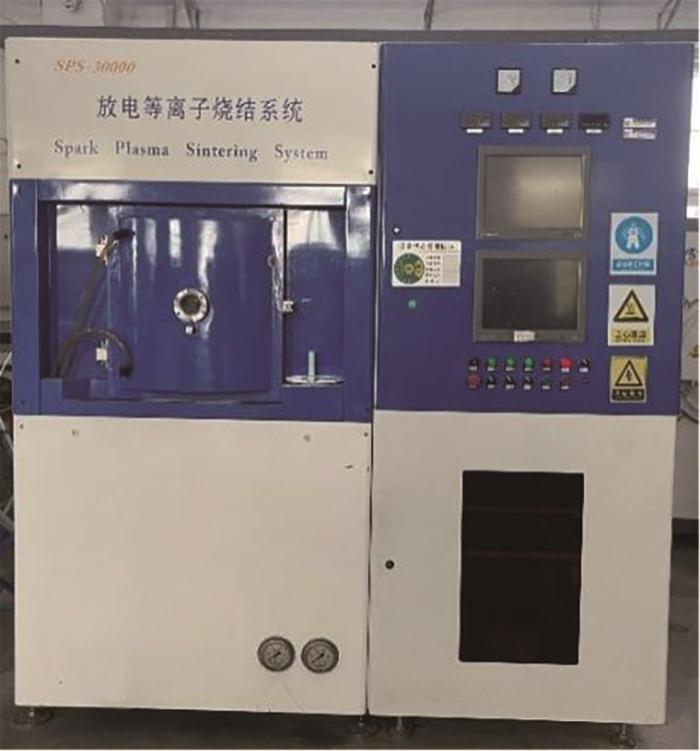
... 实验用镍箔的厚度为0.01 mm,纯度高于99.99%.用放电等离子体烧结系统进行金刚石/铜复合材料的SPS扩散连接.图1给出了放电等离子体烧结设备,其最大可输出的电流为3000 A,用方波脉冲电流加热,在理论上可加热到2200 ℃.液压系统内的真空度可达2.9 × 10⁻⁴ Pa,足以满足实验条件.在连接实验过程中温度、压力和时间对连接质量的影响极大[24],因此须调节温度、压力和时间以提高SPS扩散连接质量. ...
高Cr铁素体耐热钢与奥氏体耐热钢的异种材料扩散连接接头组织演变及力学性能
1
2022
... 实验用镍箔的厚度为0.01 mm,纯度高于99.99%.用放电等离子体烧结系统进行金刚石/铜复合材料的SPS扩散连接.图1给出了放电等离子体烧结设备,其最大可输出的电流为3000 A,用方波脉冲电流加热,在理论上可加热到2200 ℃.液压系统内的真空度可达2.9 × 10⁻⁴ Pa,足以满足实验条件.在连接实验过程中温度、压力和时间对连接质量的影响极大[24],因此须调节温度、压力和时间以提高SPS扩散连接质量. ...
An investigation on the spark plasma sintering diffusion bonding of diamond/Cu composites with a Cr interlayer
1
2024
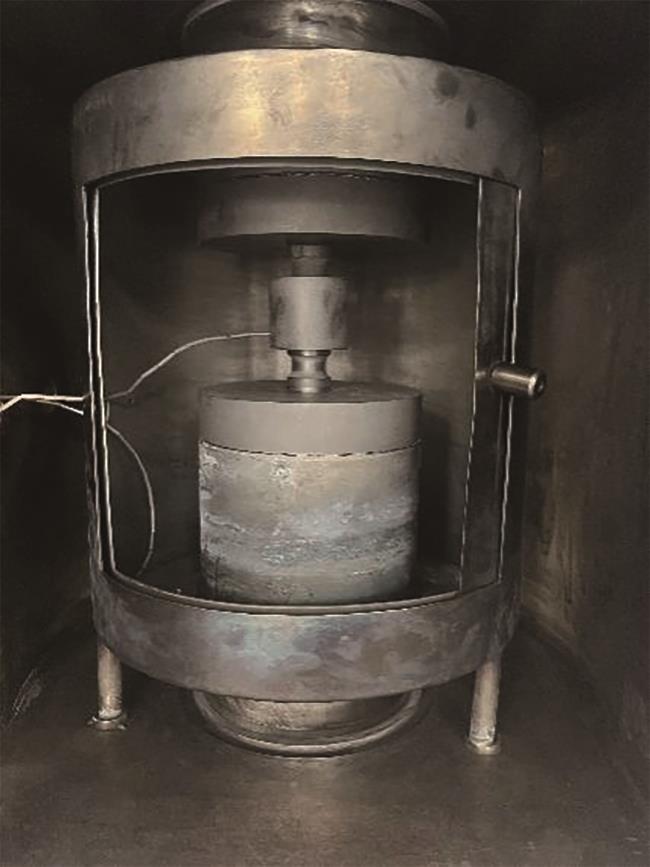
... 实验前,用清水和乙醇溶液将金刚石/铜复合材料和镍箔片超声清洗30 min,以去除材料表面的杂质[25].把清洗后的实验用材料制样后放入石墨模具中,如图2所示,施加压力前把石墨模具放入上下压头的中心以使受力均匀,插入K型热电偶实时监测试样内部温度.加热温度分别为700 ℃、750 ℃、800 ℃,加热速率为50 ℃/min,压力为10 MPa、保温保压时间分别为30 min、60 min、90 min.SPS扩散连接炉内的真空度达到6 × 10⁻³ Pa时启动脉冲电流加热.实验结束后,试样随炉冷却至100 ℃以下. ...
Research on vacuum diffusion bonding technology of 6061 aluminum alloy
1
2019
... 用激光切割SPS连接后的镍中间层金刚石/铜复合材料以制样;用平面磨床将表面精磨以使制样表面的粗糙度低于1 μm;在金相抛光仪器上抛光.用扫描电镜(SEM)观察连接界面的微观组织和断口的形貌.用能谱仪(EDS)分析连接界面元素的含量.用X射线衍射仪(XRD)测试连接界面的XRD谱.用万能试验拉伸机测试界面的剪切强度.测试制样连接前后厚度方向的变形率以评价接头的变形[26].用激光闪光分析仪测量制样的导热系数.在室温(25 ℃)下,用激光照射块状金刚石/铜复合材料的表面,一段时间后测量另一面的温度,则制样的热导率λ = αρc[27],其中α为制样的扩散系数(m2/s);ρ为制样的密度(kg/cm3);c为制样的比热容(J/(kg·K)).基于密度泛函理论的第一性原理研究连接界面的导热特性. ...
6061铝合金真空扩散焊接工艺研究
1
2019
... 用激光切割SPS连接后的镍中间层金刚石/铜复合材料以制样;用平面磨床将表面精磨以使制样表面的粗糙度低于1 μm;在金相抛光仪器上抛光.用扫描电镜(SEM)观察连接界面的微观组织和断口的形貌.用能谱仪(EDS)分析连接界面元素的含量.用X射线衍射仪(XRD)测试连接界面的XRD谱.用万能试验拉伸机测试界面的剪切强度.测试制样连接前后厚度方向的变形率以评价接头的变形[26].用激光闪光分析仪测量制样的导热系数.在室温(25 ℃)下,用激光照射块状金刚石/铜复合材料的表面,一段时间后测量另一面的温度,则制样的热导率λ = αρc[27],其中α为制样的扩散系数(m2/s);ρ为制样的密度(kg/cm3);c为制样的比热容(J/(kg·K)).基于密度泛函理论的第一性原理研究连接界面的导热特性. ...
Performance study on diamond/copper composite prepared by ultrahigh pressure sintering
1
2013
... 用激光切割SPS连接后的镍中间层金刚石/铜复合材料以制样;用平面磨床将表面精磨以使制样表面的粗糙度低于1 μm;在金相抛光仪器上抛光.用扫描电镜(SEM)观察连接界面的微观组织和断口的形貌.用能谱仪(EDS)分析连接界面元素的含量.用X射线衍射仪(XRD)测试连接界面的XRD谱.用万能试验拉伸机测试界面的剪切强度.测试制样连接前后厚度方向的变形率以评价接头的变形[26].用激光闪光分析仪测量制样的导热系数.在室温(25 ℃)下,用激光照射块状金刚石/铜复合材料的表面,一段时间后测量另一面的温度,则制样的热导率λ = αρc[27],其中α为制样的扩散系数(m2/s);ρ为制样的密度(kg/cm3);c为制样的比热容(J/(kg·K)).基于密度泛函理论的第一性原理研究连接界面的导热特性. ...
超高压烧结法制备金刚石/铜复合材料的性能研究
1
2013
... 用激光切割SPS连接后的镍中间层金刚石/铜复合材料以制样;用平面磨床将表面精磨以使制样表面的粗糙度低于1 μm;在金相抛光仪器上抛光.用扫描电镜(SEM)观察连接界面的微观组织和断口的形貌.用能谱仪(EDS)分析连接界面元素的含量.用X射线衍射仪(XRD)测试连接界面的XRD谱.用万能试验拉伸机测试界面的剪切强度.测试制样连接前后厚度方向的变形率以评价接头的变形[26].用激光闪光分析仪测量制样的导热系数.在室温(25 ℃)下,用激光照射块状金刚石/铜复合材料的表面,一段时间后测量另一面的温度,则制样的热导率λ = αρc[27],其中α为制样的扩散系数(m2/s);ρ为制样的密度(kg/cm3);c为制样的比热容(J/(kg·K)).基于密度泛函理论的第一性原理研究连接界面的导热特性. ...
Effect of the surface modification of synthetic diamond with nickel or tungsten on the properties of copper-diamond composites
1
2018
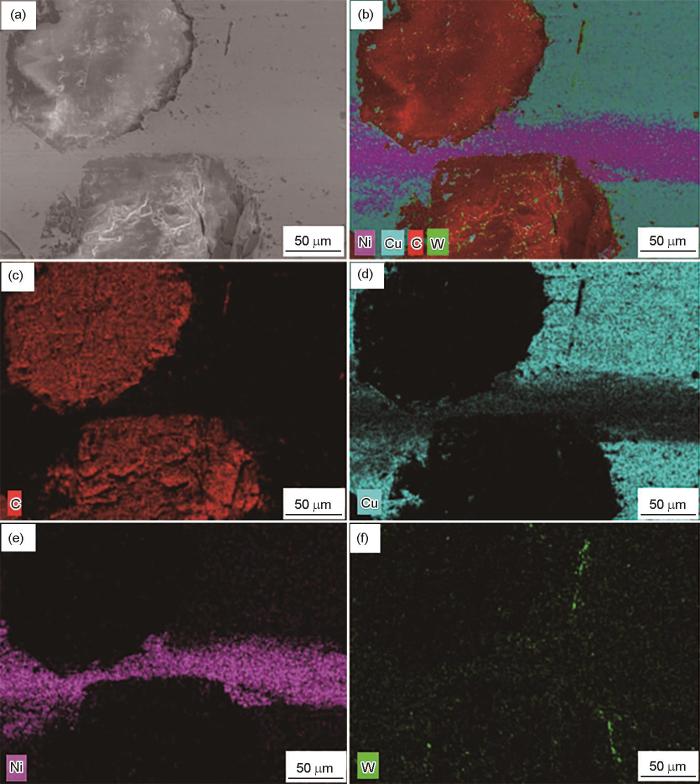
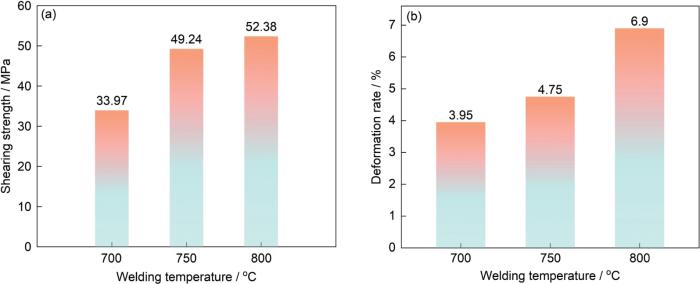
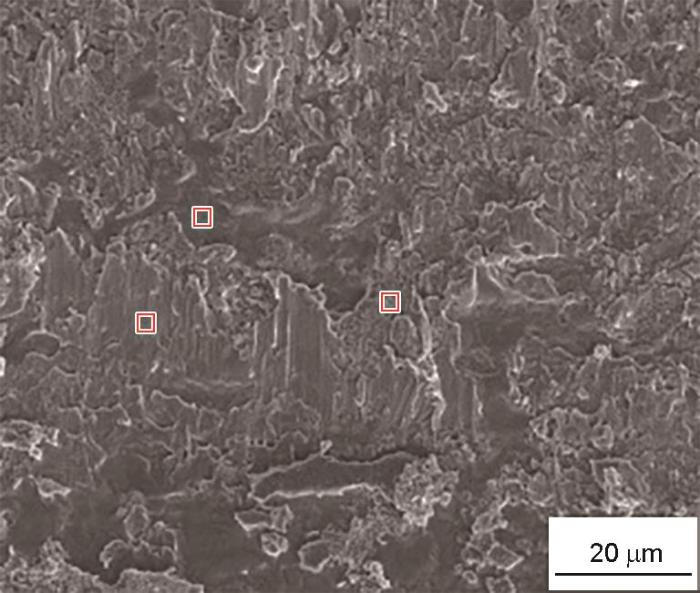
... 在连接温度为750 ℃、压力为10 MPa、保压时间为60 min的条件下,SPS连接界面的剪切强度较高而变形率较低.图8给出了镍中间层试样断口的形貌.可以看出,在镍中间层剪切断口有大量的解理面和断裂台阶.断裂台阶在金刚石与镍金属的连接处,说明连接界面的剪切强度取决于金刚石与镍元素的结合强度.在图8中的3个点取样,对断口进行EDS元素分析.结果表明,界面处铜的含量为42.49%、镍的含量为41.93%,金刚石的含量为15.55%,钨的含量为0.03%.这表明,SPS连接界面有镍和铜元素.镍与铜无限固溶[28,29],因此在连接界面生成了铜镍合金而使界面的结合强度提高. ...
Research on microstructure characteristic and thermo-physical properties of diamond/Cu-Ni
1
2021
... 在连接温度为750 ℃、压力为10 MPa、保压时间为60 min的条件下,SPS连接界面的剪切强度较高而变形率较低.图8给出了镍中间层试样断口的形貌.可以看出,在镍中间层剪切断口有大量的解理面和断裂台阶.断裂台阶在金刚石与镍金属的连接处,说明连接界面的剪切强度取决于金刚石与镍元素的结合强度.在图8中的3个点取样,对断口进行EDS元素分析.结果表明,界面处铜的含量为42.49%、镍的含量为41.93%,金刚石的含量为15.55%,钨的含量为0.03%.这表明,SPS连接界面有镍和铜元素.镍与铜无限固溶[28,29],因此在连接界面生成了铜镍合金而使界面的结合强度提高. ...
金刚石/Cu-Ni热沉微观组织及热物理性能研究
1
2021
... 在连接温度为750 ℃、压力为10 MPa、保压时间为60 min的条件下,SPS连接界面的剪切强度较高而变形率较低.图8给出了镍中间层试样断口的形貌.可以看出,在镍中间层剪切断口有大量的解理面和断裂台阶.断裂台阶在金刚石与镍金属的连接处,说明连接界面的剪切强度取决于金刚石与镍元素的结合强度.在图8中的3个点取样,对断口进行EDS元素分析.结果表明,界面处铜的含量为42.49%、镍的含量为41.93%,金刚石的含量为15.55%,钨的含量为0.03%.这表明,SPS连接界面有镍和铜元素.镍与铜无限固溶[28,29],因此在连接界面生成了铜镍合金而使界面的结合强度提高. ...
Effect of diamond surface structure on the interfacial reaction and properties of diamond/SiC composites
1
2022
... 不加中间层金属的SPS扩散连接金刚石/铜复合材料的热导率最高只有347.73 W/(m·K)[22],热导率下降的原因是金刚石与铜界面不湿润而使界面结合能力降低[30,31].在连接界面添加0.01 mm厚的镍箔进行SPS扩散连接,在室温25 ℃条件下制样的热扩散系数最高为3.0819 × 10⁻⁴ m2/s,热导率最高达到703.83 W/(m·K),与金刚石/铜母材的热导率相差不大,SPS扩散连接后其导热性能没有降低.其原因是,加入镍中间层的连接界面中的镍金属与铜金属生成了铜镍合金,使连接界面的结合强度较高.镍元素消除了界面中的空隙和孔洞等缺陷,使界面结合强度和导热性能提高[32].另一方面,界面中的缺陷使金刚石中的声子和铜、镍金属中的电子在孔洞处散射,使导热性能大大降低[33].中间层金属消除了这些缺陷,使导热性能提高. ...
Research progress of diamond/copper composites with high thermal conductivity
1
2020
... 不加中间层金属的SPS扩散连接金刚石/铜复合材料的热导率最高只有347.73 W/(m·K)[22],热导率下降的原因是金刚石与铜界面不湿润而使界面结合能力降低[30,31].在连接界面添加0.01 mm厚的镍箔进行SPS扩散连接,在室温25 ℃条件下制样的热扩散系数最高为3.0819 × 10⁻⁴ m2/s,热导率最高达到703.83 W/(m·K),与金刚石/铜母材的热导率相差不大,SPS扩散连接后其导热性能没有降低.其原因是,加入镍中间层的连接界面中的镍金属与铜金属生成了铜镍合金,使连接界面的结合强度较高.镍元素消除了界面中的空隙和孔洞等缺陷,使界面结合强度和导热性能提高[32].另一方面,界面中的缺陷使金刚石中的声子和铜、镍金属中的电子在孔洞处散射,使导热性能大大降低[33].中间层金属消除了这些缺陷,使导热性能提高. ...
Bonding-induced thermal conductance enhancement at inorganic heterointerfaces using nanomolecular monolayers
1
2013
... 不加中间层金属的SPS扩散连接金刚石/铜复合材料的热导率最高只有347.73 W/(m·K)[22],热导率下降的原因是金刚石与铜界面不湿润而使界面结合能力降低[30,31].在连接界面添加0.01 mm厚的镍箔进行SPS扩散连接,在室温25 ℃条件下制样的热扩散系数最高为3.0819 × 10⁻⁴ m2/s,热导率最高达到703.83 W/(m·K),与金刚石/铜母材的热导率相差不大,SPS扩散连接后其导热性能没有降低.其原因是,加入镍中间层的连接界面中的镍金属与铜金属生成了铜镍合金,使连接界面的结合强度较高.镍元素消除了界面中的空隙和孔洞等缺陷,使界面结合强度和导热性能提高[32].另一方面,界面中的缺陷使金刚石中的声子和铜、镍金属中的电子在孔洞处散射,使导热性能大大降低[33].中间层金属消除了这些缺陷,使导热性能提高. ...
Effects of diamond volume fraction on properties of diamond/copper composites
1
2022
... 不加中间层金属的SPS扩散连接金刚石/铜复合材料的热导率最高只有347.73 W/(m·K)[22],热导率下降的原因是金刚石与铜界面不湿润而使界面结合能力降低[30,31].在连接界面添加0.01 mm厚的镍箔进行SPS扩散连接,在室温25 ℃条件下制样的热扩散系数最高为3.0819 × 10⁻⁴ m2/s,热导率最高达到703.83 W/(m·K),与金刚石/铜母材的热导率相差不大,SPS扩散连接后其导热性能没有降低.其原因是,加入镍中间层的连接界面中的镍金属与铜金属生成了铜镍合金,使连接界面的结合强度较高.镍元素消除了界面中的空隙和孔洞等缺陷,使界面结合强度和导热性能提高[32].另一方面,界面中的缺陷使金刚石中的声子和铜、镍金属中的电子在孔洞处散射,使导热性能大大降低[33].中间层金属消除了这些缺陷,使导热性能提高. ...
金刚石体积分数对金刚石/铜基复合材料性能的影响
1
2022
... 不加中间层金属的SPS扩散连接金刚石/铜复合材料的热导率最高只有347.73 W/(m·K)[22],热导率下降的原因是金刚石与铜界面不湿润而使界面结合能力降低[30,31].在连接界面添加0.01 mm厚的镍箔进行SPS扩散连接,在室温25 ℃条件下制样的热扩散系数最高为3.0819 × 10⁻⁴ m2/s,热导率最高达到703.83 W/(m·K),与金刚石/铜母材的热导率相差不大,SPS扩散连接后其导热性能没有降低.其原因是,加入镍中间层的连接界面中的镍金属与铜金属生成了铜镍合金,使连接界面的结合强度较高.镍元素消除了界面中的空隙和孔洞等缺陷,使界面结合强度和导热性能提高[32].另一方面,界面中的缺陷使金刚石中的声子和铜、镍金属中的电子在孔洞处散射,使导热性能大大降低[33].中间层金属消除了这些缺陷,使导热性能提高. ...
First-principles calculations of absorption properties of Cs2F5Li3 to Li2S
1
2025
... 基于XRD谱和EDS分析结果,并根据界面重元素的种类,测试了金刚石和金属原子的表面能.结果表明,在金刚石10层、铜原子7层和镍原子7层的条件下表面能趋于稳定.为了保证计算的准确性,对界面结构进行弛豫以使结构合理.分析界面中可能存在的二元结合、建立了金刚石/铜、金刚石/镍、铜/镍界面模型,在计算时为了避免周期性的影响,对构建的模型添加1.5 nm的真空层[34]和采用BFGS算法[35].为了模拟连接界面的真实情况,使底层原子不动只对表面四层原子进行弛豫,在计算过程中打开自旋极化.界面模型如图10所示. ...
Cs2F5Li3对Li2S吸附的第一性原理计算
1
2025
... 基于XRD谱和EDS分析结果,并根据界面重元素的种类,测试了金刚石和金属原子的表面能.结果表明,在金刚石10层、铜原子7层和镍原子7层的条件下表面能趋于稳定.为了保证计算的准确性,对界面结构进行弛豫以使结构合理.分析界面中可能存在的二元结合、建立了金刚石/铜、金刚石/镍、铜/镍界面模型,在计算时为了避免周期性的影响,对构建的模型添加1.5 nm的真空层[34]和采用BFGS算法[35].为了模拟连接界面的真实情况,使底层原子不动只对表面四层原子进行弛豫,在计算过程中打开自旋极化.界面模型如图10所示. ...
A Broyden—Fletcher—Goldfarb—Shanno optimization procedure for molecular geometries
1
1985
... 基于XRD谱和EDS分析结果,并根据界面重元素的种类,测试了金刚石和金属原子的表面能.结果表明,在金刚石10层、铜原子7层和镍原子7层的条件下表面能趋于稳定.为了保证计算的准确性,对界面结构进行弛豫以使结构合理.分析界面中可能存在的二元结合、建立了金刚石/铜、金刚石/镍、铜/镍界面模型,在计算时为了避免周期性的影响,对构建的模型添加1.5 nm的真空层[34]和采用BFGS算法[35].为了模拟连接界面的真实情况,使底层原子不动只对表面四层原子进行弛豫,在计算过程中打开自旋极化.界面模型如图10所示. ...
Electron-phonon coupling and electron heat capacity of metals under conditions of strong electron-phonon nonequilibrium
1
2008
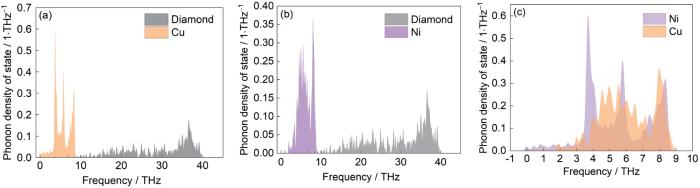
... 为了揭示连接界面中的元素影响导热性能的微观机理,计算了界面中元素的声子态密度.因为金刚石依靠声子振动进行热传导[36],各元素的声子振动的耦合对导热性能有较大的影响.对界面中各元素声子态密度的计算结果,如图11所示. ...
Effects of alloying elements on diamond/Cu interface properties based on first-principles calculations
1
2023
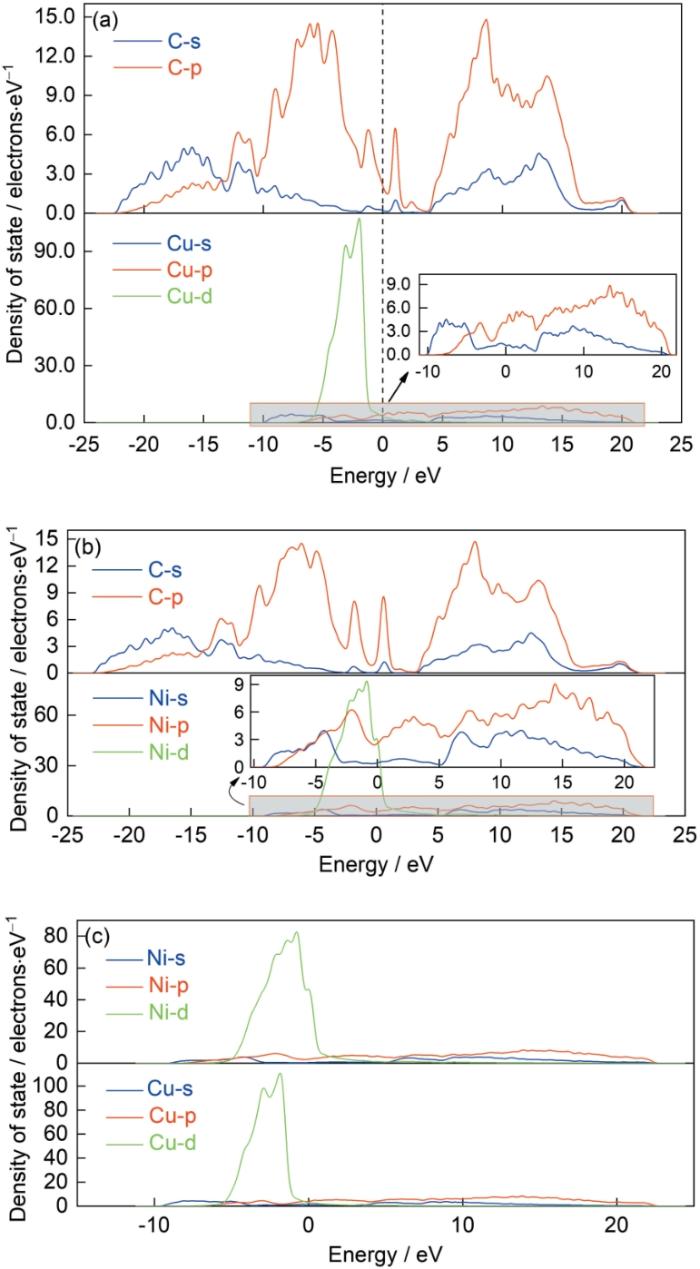
... 金刚石/铜、金刚石/镍、铜/镍的连接界面中,电子轨道之间的杂化耦合产生导热性能,电子杂化的共振峰越多则界面的导热性能越好[37].不同界面的电子态密度,在图12中给出. ...