Status and prospect of China's wind power development in 2023
1
2024
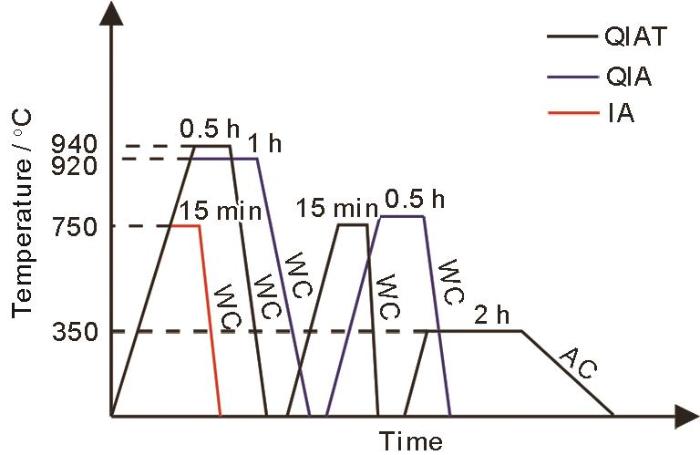
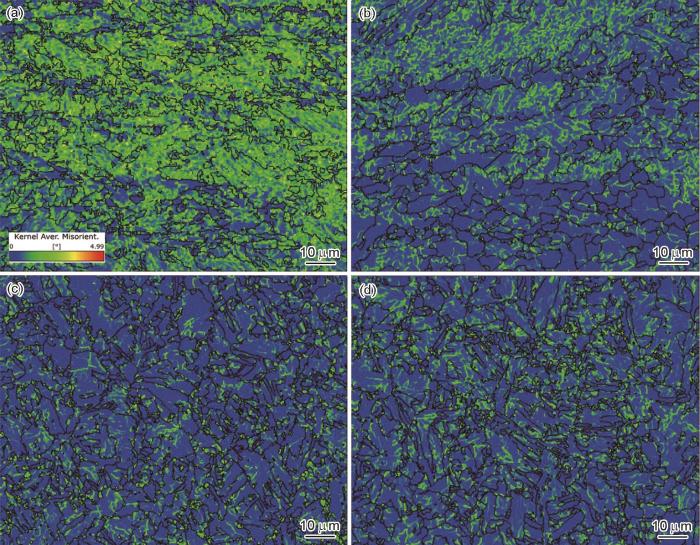
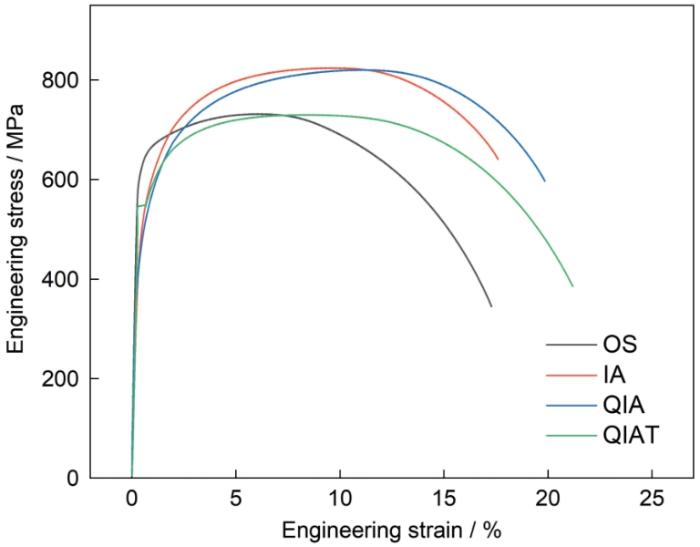
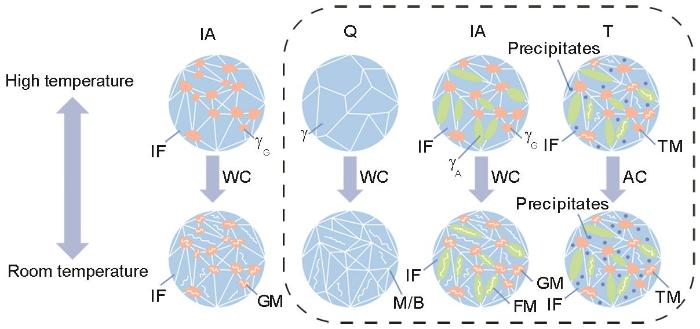
... 为了降低不可再生能源的消耗,大力发展可再生能源例如风力发电势在必行[1].随着风电塔装机容量提高,对风电用钢性能的要求随之提高[2].低屈强比(Yield ratio, YR)高强度风电钢具有优异的强塑性、耐候性和可焊性,在风电领域的用量较大[3~5].用这种风电钢制造的风电塔架等结构件,其较高的抗震和高抗疲劳性能可防止风电塔架失稳[6,7].但是,结构钢的高屈强比会使其产生局部应力集中和较大的变形而出现局部超载失稳[8].结构钢的较低碳含量(< 0.1%,质量分数)可使其可焊性能良好,Cr和Ni可提高其淬透性,Cu可提高其耐腐蚀性能和沉淀强化[9,10].用正火轧制工艺生产的高强度风电钢,其微观组织由铁素体和珠光体构成,可使其力学性能进一步提高[11,12].传统的热处理强化工艺,一般为淬火+回火.淬火使钢中产生的马氏体或贝氏体组织可提高其强度[13,14],回火可消除内应力、提高塑性、韧性并提高组织的稳定性.但是,经过淬火和回火的高强度风电钢的YR较高[5,15].这表明,须在提高高强度风电钢力学性能的同时保持或降低其YR.为此,可对高强度风电钢进行适当的热处理,在其中形成多相且多尺度的非均质微观组织[16~19].在热机械轧制工艺(Thermo-mechanical control process, TMCP)中控制弛豫时间、开冷温度、冷却速率和终冷温度,可调控软/硬质相的比例,控制原奥氏体晶粒度和变形程度以调控多相组织的精细程度,最终形成包含针状铁素体、粒状贝氏体、马氏体、少量弥散Martensite-Austenite (M-A)组元和碳化物的多相组织,可提高钢的强度和塑性[20~22].Du等[23]对高强度低合金钢进行循环退火和亚临界淬火,产生了铁素体被马氏体包裹的网状马氏体-铁素体非均质双相组织,在降低YR的同时提高了抗拉强度和均匀延伸率.Xie等[24,25]研究表明,临界退火后进行两步临界回火工艺可产生铁素体、马氏体和残余奥氏体的非均质微观组织,在降低YR的同时组织中的残余奥氏体可以显著提高材料的塑性.非均质微观组织中各相的强度差异较大,进行临界退火可使硬马氏体相嵌入奥氏体或铁素体基体中[26~29].与传统的淬火和回火工艺相比,临界退火能在提高高强度低合金钢的塑性和韧性的同时降低其YR[30].因此,将临界退火与淬火回火相结合,可在提高高强度风电钢强度的同时降低其YR并提高塑性.但是,与进行两步临界热处理产生的包含残余奥氏体的非均质组织不同,这种非均质化热处理产生的组织中并不包含残余奥氏体.鉴于此,本文对典型500 MPa级高强度风电钢进行以临界退火为主的新热处理工艺,以产生临界铁素体+马氏体/回火马氏体等非均质组织,研究其对拉伸性能的影响及其损伤机制以及对YR的影响. ...
2023年中国风电发展现状与展望
1
2024
... 为了降低不可再生能源的消耗,大力发展可再生能源例如风力发电势在必行[1].随着风电塔装机容量提高,对风电用钢性能的要求随之提高[2].低屈强比(Yield ratio, YR)高强度风电钢具有优异的强塑性、耐候性和可焊性,在风电领域的用量较大[3~5].用这种风电钢制造的风电塔架等结构件,其较高的抗震和高抗疲劳性能可防止风电塔架失稳[6,7].但是,结构钢的高屈强比会使其产生局部应力集中和较大的变形而出现局部超载失稳[8].结构钢的较低碳含量(< 0.1%,质量分数)可使其可焊性能良好,Cr和Ni可提高其淬透性,Cu可提高其耐腐蚀性能和沉淀强化[9,10].用正火轧制工艺生产的高强度风电钢,其微观组织由铁素体和珠光体构成,可使其力学性能进一步提高[11,12].传统的热处理强化工艺,一般为淬火+回火.淬火使钢中产生的马氏体或贝氏体组织可提高其强度[13,14],回火可消除内应力、提高塑性、韧性并提高组织的稳定性.但是,经过淬火和回火的高强度风电钢的YR较高[5,15].这表明,须在提高高强度风电钢力学性能的同时保持或降低其YR.为此,可对高强度风电钢进行适当的热处理,在其中形成多相且多尺度的非均质微观组织[16~19].在热机械轧制工艺(Thermo-mechanical control process, TMCP)中控制弛豫时间、开冷温度、冷却速率和终冷温度,可调控软/硬质相的比例,控制原奥氏体晶粒度和变形程度以调控多相组织的精细程度,最终形成包含针状铁素体、粒状贝氏体、马氏体、少量弥散Martensite-Austenite (M-A)组元和碳化物的多相组织,可提高钢的强度和塑性[20~22].Du等[23]对高强度低合金钢进行循环退火和亚临界淬火,产生了铁素体被马氏体包裹的网状马氏体-铁素体非均质双相组织,在降低YR的同时提高了抗拉强度和均匀延伸率.Xie等[24,25]研究表明,临界退火后进行两步临界回火工艺可产生铁素体、马氏体和残余奥氏体的非均质微观组织,在降低YR的同时组织中的残余奥氏体可以显著提高材料的塑性.非均质微观组织中各相的强度差异较大,进行临界退火可使硬马氏体相嵌入奥氏体或铁素体基体中[26~29].与传统的淬火和回火工艺相比,临界退火能在提高高强度低合金钢的塑性和韧性的同时降低其YR[30].因此,将临界退火与淬火回火相结合,可在提高高强度风电钢强度的同时降低其YR并提高塑性.但是,与进行两步临界热处理产生的包含残余奥氏体的非均质组织不同,这种非均质化热处理产生的组织中并不包含残余奥氏体.鉴于此,本文对典型500 MPa级高强度风电钢进行以临界退火为主的新热处理工艺,以产生临界铁素体+马氏体/回火马氏体等非均质组织,研究其对拉伸性能的影响及其损伤机制以及对YR的影响. ...
Market analysis and technology development of wind energy steel in China
1
2012
... 为了降低不可再生能源的消耗,大力发展可再生能源例如风力发电势在必行[1].随着风电塔装机容量提高,对风电用钢性能的要求随之提高[2].低屈强比(Yield ratio, YR)高强度风电钢具有优异的强塑性、耐候性和可焊性,在风电领域的用量较大[3~5].用这种风电钢制造的风电塔架等结构件,其较高的抗震和高抗疲劳性能可防止风电塔架失稳[6,7].但是,结构钢的高屈强比会使其产生局部应力集中和较大的变形而出现局部超载失稳[8].结构钢的较低碳含量(< 0.1%,质量分数)可使其可焊性能良好,Cr和Ni可提高其淬透性,Cu可提高其耐腐蚀性能和沉淀强化[9,10].用正火轧制工艺生产的高强度风电钢,其微观组织由铁素体和珠光体构成,可使其力学性能进一步提高[11,12].传统的热处理强化工艺,一般为淬火+回火.淬火使钢中产生的马氏体或贝氏体组织可提高其强度[13,14],回火可消除内应力、提高塑性、韧性并提高组织的稳定性.但是,经过淬火和回火的高强度风电钢的YR较高[5,15].这表明,须在提高高强度风电钢力学性能的同时保持或降低其YR.为此,可对高强度风电钢进行适当的热处理,在其中形成多相且多尺度的非均质微观组织[16~19].在热机械轧制工艺(Thermo-mechanical control process, TMCP)中控制弛豫时间、开冷温度、冷却速率和终冷温度,可调控软/硬质相的比例,控制原奥氏体晶粒度和变形程度以调控多相组织的精细程度,最终形成包含针状铁素体、粒状贝氏体、马氏体、少量弥散Martensite-Austenite (M-A)组元和碳化物的多相组织,可提高钢的强度和塑性[20~22].Du等[23]对高强度低合金钢进行循环退火和亚临界淬火,产生了铁素体被马氏体包裹的网状马氏体-铁素体非均质双相组织,在降低YR的同时提高了抗拉强度和均匀延伸率.Xie等[24,25]研究表明,临界退火后进行两步临界回火工艺可产生铁素体、马氏体和残余奥氏体的非均质微观组织,在降低YR的同时组织中的残余奥氏体可以显著提高材料的塑性.非均质微观组织中各相的强度差异较大,进行临界退火可使硬马氏体相嵌入奥氏体或铁素体基体中[26~29].与传统的淬火和回火工艺相比,临界退火能在提高高强度低合金钢的塑性和韧性的同时降低其YR[30].因此,将临界退火与淬火回火相结合,可在提高高强度风电钢强度的同时降低其YR并提高塑性.但是,与进行两步临界热处理产生的包含残余奥氏体的非均质组织不同,这种非均质化热处理产生的组织中并不包含残余奥氏体.鉴于此,本文对典型500 MPa级高强度风电钢进行以临界退火为主的新热处理工艺,以产生临界铁素体+马氏体/回火马氏体等非均质组织,研究其对拉伸性能的影响及其损伤机制以及对YR的影响. ...
国内风电用钢市场分析与技术开发
1
2012
... 为了降低不可再生能源的消耗,大力发展可再生能源例如风力发电势在必行[1].随着风电塔装机容量提高,对风电用钢性能的要求随之提高[2].低屈强比(Yield ratio, YR)高强度风电钢具有优异的强塑性、耐候性和可焊性,在风电领域的用量较大[3~5].用这种风电钢制造的风电塔架等结构件,其较高的抗震和高抗疲劳性能可防止风电塔架失稳[6,7].但是,结构钢的高屈强比会使其产生局部应力集中和较大的变形而出现局部超载失稳[8].结构钢的较低碳含量(< 0.1%,质量分数)可使其可焊性能良好,Cr和Ni可提高其淬透性,Cu可提高其耐腐蚀性能和沉淀强化[9,10].用正火轧制工艺生产的高强度风电钢,其微观组织由铁素体和珠光体构成,可使其力学性能进一步提高[11,12].传统的热处理强化工艺,一般为淬火+回火.淬火使钢中产生的马氏体或贝氏体组织可提高其强度[13,14],回火可消除内应力、提高塑性、韧性并提高组织的稳定性.但是,经过淬火和回火的高强度风电钢的YR较高[5,15].这表明,须在提高高强度风电钢力学性能的同时保持或降低其YR.为此,可对高强度风电钢进行适当的热处理,在其中形成多相且多尺度的非均质微观组织[16~19].在热机械轧制工艺(Thermo-mechanical control process, TMCP)中控制弛豫时间、开冷温度、冷却速率和终冷温度,可调控软/硬质相的比例,控制原奥氏体晶粒度和变形程度以调控多相组织的精细程度,最终形成包含针状铁素体、粒状贝氏体、马氏体、少量弥散Martensite-Austenite (M-A)组元和碳化物的多相组织,可提高钢的强度和塑性[20~22].Du等[23]对高强度低合金钢进行循环退火和亚临界淬火,产生了铁素体被马氏体包裹的网状马氏体-铁素体非均质双相组织,在降低YR的同时提高了抗拉强度和均匀延伸率.Xie等[24,25]研究表明,临界退火后进行两步临界回火工艺可产生铁素体、马氏体和残余奥氏体的非均质微观组织,在降低YR的同时组织中的残余奥氏体可以显著提高材料的塑性.非均质微观组织中各相的强度差异较大,进行临界退火可使硬马氏体相嵌入奥氏体或铁素体基体中[26~29].与传统的淬火和回火工艺相比,临界退火能在提高高强度低合金钢的塑性和韧性的同时降低其YR[30].因此,将临界退火与淬火回火相结合,可在提高高强度风电钢强度的同时降低其YR并提高塑性.但是,与进行两步临界热处理产生的包含残余奥氏体的非均质组织不同,这种非均质化热处理产生的组织中并不包含残余奥氏体.鉴于此,本文对典型500 MPa级高强度风电钢进行以临界退火为主的新热处理工艺,以产生临界铁素体+马氏体/回火马氏体等非均质组织,研究其对拉伸性能的影响及其损伤机制以及对YR的影响. ...
State-of-the-art and development trends of HSLA steels in China
1
2011
... 为了降低不可再生能源的消耗,大力发展可再生能源例如风力发电势在必行[1].随着风电塔装机容量提高,对风电用钢性能的要求随之提高[2].低屈强比(Yield ratio, YR)高强度风电钢具有优异的强塑性、耐候性和可焊性,在风电领域的用量较大[3~5].用这种风电钢制造的风电塔架等结构件,其较高的抗震和高抗疲劳性能可防止风电塔架失稳[6,7].但是,结构钢的高屈强比会使其产生局部应力集中和较大的变形而出现局部超载失稳[8].结构钢的较低碳含量(< 0.1%,质量分数)可使其可焊性能良好,Cr和Ni可提高其淬透性,Cu可提高其耐腐蚀性能和沉淀强化[9,10].用正火轧制工艺生产的高强度风电钢,其微观组织由铁素体和珠光体构成,可使其力学性能进一步提高[11,12].传统的热处理强化工艺,一般为淬火+回火.淬火使钢中产生的马氏体或贝氏体组织可提高其强度[13,14],回火可消除内应力、提高塑性、韧性并提高组织的稳定性.但是,经过淬火和回火的高强度风电钢的YR较高[5,15].这表明,须在提高高强度风电钢力学性能的同时保持或降低其YR.为此,可对高强度风电钢进行适当的热处理,在其中形成多相且多尺度的非均质微观组织[16~19].在热机械轧制工艺(Thermo-mechanical control process, TMCP)中控制弛豫时间、开冷温度、冷却速率和终冷温度,可调控软/硬质相的比例,控制原奥氏体晶粒度和变形程度以调控多相组织的精细程度,最终形成包含针状铁素体、粒状贝氏体、马氏体、少量弥散Martensite-Austenite (M-A)组元和碳化物的多相组织,可提高钢的强度和塑性[20~22].Du等[23]对高强度低合金钢进行循环退火和亚临界淬火,产生了铁素体被马氏体包裹的网状马氏体-铁素体非均质双相组织,在降低YR的同时提高了抗拉强度和均匀延伸率.Xie等[24,25]研究表明,临界退火后进行两步临界回火工艺可产生铁素体、马氏体和残余奥氏体的非均质微观组织,在降低YR的同时组织中的残余奥氏体可以显著提高材料的塑性.非均质微观组织中各相的强度差异较大,进行临界退火可使硬马氏体相嵌入奥氏体或铁素体基体中[26~29].与传统的淬火和回火工艺相比,临界退火能在提高高强度低合金钢的塑性和韧性的同时降低其YR[30].因此,将临界退火与淬火回火相结合,可在提高高强度风电钢强度的同时降低其YR并提高塑性.但是,与进行两步临界热处理产生的包含残余奥氏体的非均质组织不同,这种非均质化热处理产生的组织中并不包含残余奥氏体.鉴于此,本文对典型500 MPa级高强度风电钢进行以临界退火为主的新热处理工艺,以产生临界铁素体+马氏体/回火马氏体等非均质组织,研究其对拉伸性能的影响及其损伤机制以及对YR的影响. ...
低合金钢在中国的发展现状与趋势
1
2011
... 为了降低不可再生能源的消耗,大力发展可再生能源例如风力发电势在必行[1].随着风电塔装机容量提高,对风电用钢性能的要求随之提高[2].低屈强比(Yield ratio, YR)高强度风电钢具有优异的强塑性、耐候性和可焊性,在风电领域的用量较大[3~5].用这种风电钢制造的风电塔架等结构件,其较高的抗震和高抗疲劳性能可防止风电塔架失稳[6,7].但是,结构钢的高屈强比会使其产生局部应力集中和较大的变形而出现局部超载失稳[8].结构钢的较低碳含量(< 0.1%,质量分数)可使其可焊性能良好,Cr和Ni可提高其淬透性,Cu可提高其耐腐蚀性能和沉淀强化[9,10].用正火轧制工艺生产的高强度风电钢,其微观组织由铁素体和珠光体构成,可使其力学性能进一步提高[11,12].传统的热处理强化工艺,一般为淬火+回火.淬火使钢中产生的马氏体或贝氏体组织可提高其强度[13,14],回火可消除内应力、提高塑性、韧性并提高组织的稳定性.但是,经过淬火和回火的高强度风电钢的YR较高[5,15].这表明,须在提高高强度风电钢力学性能的同时保持或降低其YR.为此,可对高强度风电钢进行适当的热处理,在其中形成多相且多尺度的非均质微观组织[16~19].在热机械轧制工艺(Thermo-mechanical control process, TMCP)中控制弛豫时间、开冷温度、冷却速率和终冷温度,可调控软/硬质相的比例,控制原奥氏体晶粒度和变形程度以调控多相组织的精细程度,最终形成包含针状铁素体、粒状贝氏体、马氏体、少量弥散Martensite-Austenite (M-A)组元和碳化物的多相组织,可提高钢的强度和塑性[20~22].Du等[23]对高强度低合金钢进行循环退火和亚临界淬火,产生了铁素体被马氏体包裹的网状马氏体-铁素体非均质双相组织,在降低YR的同时提高了抗拉强度和均匀延伸率.Xie等[24,25]研究表明,临界退火后进行两步临界回火工艺可产生铁素体、马氏体和残余奥氏体的非均质微观组织,在降低YR的同时组织中的残余奥氏体可以显著提高材料的塑性.非均质微观组织中各相的强度差异较大,进行临界退火可使硬马氏体相嵌入奥氏体或铁素体基体中[26~29].与传统的淬火和回火工艺相比,临界退火能在提高高强度低合金钢的塑性和韧性的同时降低其YR[30].因此,将临界退火与淬火回火相结合,可在提高高强度风电钢强度的同时降低其YR并提高塑性.但是,与进行两步临界热处理产生的包含残余奥氏体的非均质组织不同,这种非均质化热处理产生的组织中并不包含残余奥氏体.鉴于此,本文对典型500 MPa级高强度风电钢进行以临界退火为主的新热处理工艺,以产生临界铁素体+马氏体/回火马氏体等非均质组织,研究其对拉伸性能的影响及其损伤机制以及对YR的影响. ...
Strengthening and toughening of a heavy plate steel for shipbuilding with yield strength of approximately 690 MPa
0
2013
Effect of tempering temperatures on the mechanical properties and microstructures of HSLA-100 type copper-bearing steels
2
2001
... 为了降低不可再生能源的消耗,大力发展可再生能源例如风力发电势在必行[1].随着风电塔装机容量提高,对风电用钢性能的要求随之提高[2].低屈强比(Yield ratio, YR)高强度风电钢具有优异的强塑性、耐候性和可焊性,在风电领域的用量较大[3~5].用这种风电钢制造的风电塔架等结构件,其较高的抗震和高抗疲劳性能可防止风电塔架失稳[6,7].但是,结构钢的高屈强比会使其产生局部应力集中和较大的变形而出现局部超载失稳[8].结构钢的较低碳含量(< 0.1%,质量分数)可使其可焊性能良好,Cr和Ni可提高其淬透性,Cu可提高其耐腐蚀性能和沉淀强化[9,10].用正火轧制工艺生产的高强度风电钢,其微观组织由铁素体和珠光体构成,可使其力学性能进一步提高[11,12].传统的热处理强化工艺,一般为淬火+回火.淬火使钢中产生的马氏体或贝氏体组织可提高其强度[13,14],回火可消除内应力、提高塑性、韧性并提高组织的稳定性.但是,经过淬火和回火的高强度风电钢的YR较高[5,15].这表明,须在提高高强度风电钢力学性能的同时保持或降低其YR.为此,可对高强度风电钢进行适当的热处理,在其中形成多相且多尺度的非均质微观组织[16~19].在热机械轧制工艺(Thermo-mechanical control process, TMCP)中控制弛豫时间、开冷温度、冷却速率和终冷温度,可调控软/硬质相的比例,控制原奥氏体晶粒度和变形程度以调控多相组织的精细程度,最终形成包含针状铁素体、粒状贝氏体、马氏体、少量弥散Martensite-Austenite (M-A)组元和碳化物的多相组织,可提高钢的强度和塑性[20~22].Du等[23]对高强度低合金钢进行循环退火和亚临界淬火,产生了铁素体被马氏体包裹的网状马氏体-铁素体非均质双相组织,在降低YR的同时提高了抗拉强度和均匀延伸率.Xie等[24,25]研究表明,临界退火后进行两步临界回火工艺可产生铁素体、马氏体和残余奥氏体的非均质微观组织,在降低YR的同时组织中的残余奥氏体可以显著提高材料的塑性.非均质微观组织中各相的强度差异较大,进行临界退火可使硬马氏体相嵌入奥氏体或铁素体基体中[26~29].与传统的淬火和回火工艺相比,临界退火能在提高高强度低合金钢的塑性和韧性的同时降低其YR[30].因此,将临界退火与淬火回火相结合,可在提高高强度风电钢强度的同时降低其YR并提高塑性.但是,与进行两步临界热处理产生的包含残余奥氏体的非均质组织不同,这种非均质化热处理产生的组织中并不包含残余奥氏体.鉴于此,本文对典型500 MPa级高强度风电钢进行以临界退火为主的新热处理工艺,以产生临界铁素体+马氏体/回火马氏体等非均质组织,研究其对拉伸性能的影响及其损伤机制以及对YR的影响. ...
... [5,15].这表明,须在提高高强度风电钢力学性能的同时保持或降低其YR.为此,可对高强度风电钢进行适当的热处理,在其中形成多相且多尺度的非均质微观组织[16~19].在热机械轧制工艺(Thermo-mechanical control process, TMCP)中控制弛豫时间、开冷温度、冷却速率和终冷温度,可调控软/硬质相的比例,控制原奥氏体晶粒度和变形程度以调控多相组织的精细程度,最终形成包含针状铁素体、粒状贝氏体、马氏体、少量弥散Martensite-Austenite (M-A)组元和碳化物的多相组织,可提高钢的强度和塑性[20~22].Du等[23]对高强度低合金钢进行循环退火和亚临界淬火,产生了铁素体被马氏体包裹的网状马氏体-铁素体非均质双相组织,在降低YR的同时提高了抗拉强度和均匀延伸率.Xie等[24,25]研究表明,临界退火后进行两步临界回火工艺可产生铁素体、马氏体和残余奥氏体的非均质微观组织,在降低YR的同时组织中的残余奥氏体可以显著提高材料的塑性.非均质微观组织中各相的强度差异较大,进行临界退火可使硬马氏体相嵌入奥氏体或铁素体基体中[26~29].与传统的淬火和回火工艺相比,临界退火能在提高高强度低合金钢的塑性和韧性的同时降低其YR[30].因此,将临界退火与淬火回火相结合,可在提高高强度风电钢强度的同时降低其YR并提高塑性.但是,与进行两步临界热处理产生的包含残余奥氏体的非均质组织不同,这种非均质化热处理产生的组织中并不包含残余奥氏体.鉴于此,本文对典型500 MPa级高强度风电钢进行以临界退火为主的新热处理工艺,以产生临界铁素体+马氏体/回火马氏体等非均质组织,研究其对拉伸性能的影响及其损伤机制以及对YR的影响. ...
Yield-strength ratio of steel plate for high-rise building
1
2007
... 为了降低不可再生能源的消耗,大力发展可再生能源例如风力发电势在必行[1].随着风电塔装机容量提高,对风电用钢性能的要求随之提高[2].低屈强比(Yield ratio, YR)高强度风电钢具有优异的强塑性、耐候性和可焊性,在风电领域的用量较大[3~5].用这种风电钢制造的风电塔架等结构件,其较高的抗震和高抗疲劳性能可防止风电塔架失稳[6,7].但是,结构钢的高屈强比会使其产生局部应力集中和较大的变形而出现局部超载失稳[8].结构钢的较低碳含量(< 0.1%,质量分数)可使其可焊性能良好,Cr和Ni可提高其淬透性,Cu可提高其耐腐蚀性能和沉淀强化[9,10].用正火轧制工艺生产的高强度风电钢,其微观组织由铁素体和珠光体构成,可使其力学性能进一步提高[11,12].传统的热处理强化工艺,一般为淬火+回火.淬火使钢中产生的马氏体或贝氏体组织可提高其强度[13,14],回火可消除内应力、提高塑性、韧性并提高组织的稳定性.但是,经过淬火和回火的高强度风电钢的YR较高[5,15].这表明,须在提高高强度风电钢力学性能的同时保持或降低其YR.为此,可对高强度风电钢进行适当的热处理,在其中形成多相且多尺度的非均质微观组织[16~19].在热机械轧制工艺(Thermo-mechanical control process, TMCP)中控制弛豫时间、开冷温度、冷却速率和终冷温度,可调控软/硬质相的比例,控制原奥氏体晶粒度和变形程度以调控多相组织的精细程度,最终形成包含针状铁素体、粒状贝氏体、马氏体、少量弥散Martensite-Austenite (M-A)组元和碳化物的多相组织,可提高钢的强度和塑性[20~22].Du等[23]对高强度低合金钢进行循环退火和亚临界淬火,产生了铁素体被马氏体包裹的网状马氏体-铁素体非均质双相组织,在降低YR的同时提高了抗拉强度和均匀延伸率.Xie等[24,25]研究表明,临界退火后进行两步临界回火工艺可产生铁素体、马氏体和残余奥氏体的非均质微观组织,在降低YR的同时组织中的残余奥氏体可以显著提高材料的塑性.非均质微观组织中各相的强度差异较大,进行临界退火可使硬马氏体相嵌入奥氏体或铁素体基体中[26~29].与传统的淬火和回火工艺相比,临界退火能在提高高强度低合金钢的塑性和韧性的同时降低其YR[30].因此,将临界退火与淬火回火相结合,可在提高高强度风电钢强度的同时降低其YR并提高塑性.但是,与进行两步临界热处理产生的包含残余奥氏体的非均质组织不同,这种非均质化热处理产生的组织中并不包含残余奥氏体.鉴于此,本文对典型500 MPa级高强度风电钢进行以临界退火为主的新热处理工艺,以产生临界铁素体+马氏体/回火马氏体等非均质组织,研究其对拉伸性能的影响及其损伤机制以及对YR的影响. ...
高层建筑用钢板的屈强比
1
2007
... 为了降低不可再生能源的消耗,大力发展可再生能源例如风力发电势在必行[1].随着风电塔装机容量提高,对风电用钢性能的要求随之提高[2].低屈强比(Yield ratio, YR)高强度风电钢具有优异的强塑性、耐候性和可焊性,在风电领域的用量较大[3~5].用这种风电钢制造的风电塔架等结构件,其较高的抗震和高抗疲劳性能可防止风电塔架失稳[6,7].但是,结构钢的高屈强比会使其产生局部应力集中和较大的变形而出现局部超载失稳[8].结构钢的较低碳含量(< 0.1%,质量分数)可使其可焊性能良好,Cr和Ni可提高其淬透性,Cu可提高其耐腐蚀性能和沉淀强化[9,10].用正火轧制工艺生产的高强度风电钢,其微观组织由铁素体和珠光体构成,可使其力学性能进一步提高[11,12].传统的热处理强化工艺,一般为淬火+回火.淬火使钢中产生的马氏体或贝氏体组织可提高其强度[13,14],回火可消除内应力、提高塑性、韧性并提高组织的稳定性.但是,经过淬火和回火的高强度风电钢的YR较高[5,15].这表明,须在提高高强度风电钢力学性能的同时保持或降低其YR.为此,可对高强度风电钢进行适当的热处理,在其中形成多相且多尺度的非均质微观组织[16~19].在热机械轧制工艺(Thermo-mechanical control process, TMCP)中控制弛豫时间、开冷温度、冷却速率和终冷温度,可调控软/硬质相的比例,控制原奥氏体晶粒度和变形程度以调控多相组织的精细程度,最终形成包含针状铁素体、粒状贝氏体、马氏体、少量弥散Martensite-Austenite (M-A)组元和碳化物的多相组织,可提高钢的强度和塑性[20~22].Du等[23]对高强度低合金钢进行循环退火和亚临界淬火,产生了铁素体被马氏体包裹的网状马氏体-铁素体非均质双相组织,在降低YR的同时提高了抗拉强度和均匀延伸率.Xie等[24,25]研究表明,临界退火后进行两步临界回火工艺可产生铁素体、马氏体和残余奥氏体的非均质微观组织,在降低YR的同时组织中的残余奥氏体可以显著提高材料的塑性.非均质微观组织中各相的强度差异较大,进行临界退火可使硬马氏体相嵌入奥氏体或铁素体基体中[26~29].与传统的淬火和回火工艺相比,临界退火能在提高高强度低合金钢的塑性和韧性的同时降低其YR[30].因此,将临界退火与淬火回火相结合,可在提高高强度风电钢强度的同时降低其YR并提高塑性.但是,与进行两步临界热处理产生的包含残余奥氏体的非均质组织不同,这种非均质化热处理产生的组织中并不包含残余奥氏体.鉴于此,本文对典型500 MPa级高强度风电钢进行以临界退火为主的新热处理工艺,以产生临界铁素体+马氏体/回火马氏体等非均质组织,研究其对拉伸性能的影响及其损伤机制以及对YR的影响. ...
Research advance of influence of yield-to-tensile strength ratio on seismic behavior of steel frames
1
2010
... 为了降低不可再生能源的消耗,大力发展可再生能源例如风力发电势在必行[1].随着风电塔装机容量提高,对风电用钢性能的要求随之提高[2].低屈强比(Yield ratio, YR)高强度风电钢具有优异的强塑性、耐候性和可焊性,在风电领域的用量较大[3~5].用这种风电钢制造的风电塔架等结构件,其较高的抗震和高抗疲劳性能可防止风电塔架失稳[6,7].但是,结构钢的高屈强比会使其产生局部应力集中和较大的变形而出现局部超载失稳[8].结构钢的较低碳含量(< 0.1%,质量分数)可使其可焊性能良好,Cr和Ni可提高其淬透性,Cu可提高其耐腐蚀性能和沉淀强化[9,10].用正火轧制工艺生产的高强度风电钢,其微观组织由铁素体和珠光体构成,可使其力学性能进一步提高[11,12].传统的热处理强化工艺,一般为淬火+回火.淬火使钢中产生的马氏体或贝氏体组织可提高其强度[13,14],回火可消除内应力、提高塑性、韧性并提高组织的稳定性.但是,经过淬火和回火的高强度风电钢的YR较高[5,15].这表明,须在提高高强度风电钢力学性能的同时保持或降低其YR.为此,可对高强度风电钢进行适当的热处理,在其中形成多相且多尺度的非均质微观组织[16~19].在热机械轧制工艺(Thermo-mechanical control process, TMCP)中控制弛豫时间、开冷温度、冷却速率和终冷温度,可调控软/硬质相的比例,控制原奥氏体晶粒度和变形程度以调控多相组织的精细程度,最终形成包含针状铁素体、粒状贝氏体、马氏体、少量弥散Martensite-Austenite (M-A)组元和碳化物的多相组织,可提高钢的强度和塑性[20~22].Du等[23]对高强度低合金钢进行循环退火和亚临界淬火,产生了铁素体被马氏体包裹的网状马氏体-铁素体非均质双相组织,在降低YR的同时提高了抗拉强度和均匀延伸率.Xie等[24,25]研究表明,临界退火后进行两步临界回火工艺可产生铁素体、马氏体和残余奥氏体的非均质微观组织,在降低YR的同时组织中的残余奥氏体可以显著提高材料的塑性.非均质微观组织中各相的强度差异较大,进行临界退火可使硬马氏体相嵌入奥氏体或铁素体基体中[26~29].与传统的淬火和回火工艺相比,临界退火能在提高高强度低合金钢的塑性和韧性的同时降低其YR[30].因此,将临界退火与淬火回火相结合,可在提高高强度风电钢强度的同时降低其YR并提高塑性.但是,与进行两步临界热处理产生的包含残余奥氏体的非均质组织不同,这种非均质化热处理产生的组织中并不包含残余奥氏体.鉴于此,本文对典型500 MPa级高强度风电钢进行以临界退火为主的新热处理工艺,以产生临界铁素体+马氏体/回火马氏体等非均质组织,研究其对拉伸性能的影响及其损伤机制以及对YR的影响. ...
屈强比对钢框架抗震性能影响研究进展
1
2010
... 为了降低不可再生能源的消耗,大力发展可再生能源例如风力发电势在必行[1].随着风电塔装机容量提高,对风电用钢性能的要求随之提高[2].低屈强比(Yield ratio, YR)高强度风电钢具有优异的强塑性、耐候性和可焊性,在风电领域的用量较大[3~5].用这种风电钢制造的风电塔架等结构件,其较高的抗震和高抗疲劳性能可防止风电塔架失稳[6,7].但是,结构钢的高屈强比会使其产生局部应力集中和较大的变形而出现局部超载失稳[8].结构钢的较低碳含量(< 0.1%,质量分数)可使其可焊性能良好,Cr和Ni可提高其淬透性,Cu可提高其耐腐蚀性能和沉淀强化[9,10].用正火轧制工艺生产的高强度风电钢,其微观组织由铁素体和珠光体构成,可使其力学性能进一步提高[11,12].传统的热处理强化工艺,一般为淬火+回火.淬火使钢中产生的马氏体或贝氏体组织可提高其强度[13,14],回火可消除内应力、提高塑性、韧性并提高组织的稳定性.但是,经过淬火和回火的高强度风电钢的YR较高[5,15].这表明,须在提高高强度风电钢力学性能的同时保持或降低其YR.为此,可对高强度风电钢进行适当的热处理,在其中形成多相且多尺度的非均质微观组织[16~19].在热机械轧制工艺(Thermo-mechanical control process, TMCP)中控制弛豫时间、开冷温度、冷却速率和终冷温度,可调控软/硬质相的比例,控制原奥氏体晶粒度和变形程度以调控多相组织的精细程度,最终形成包含针状铁素体、粒状贝氏体、马氏体、少量弥散Martensite-Austenite (M-A)组元和碳化物的多相组织,可提高钢的强度和塑性[20~22].Du等[23]对高强度低合金钢进行循环退火和亚临界淬火,产生了铁素体被马氏体包裹的网状马氏体-铁素体非均质双相组织,在降低YR的同时提高了抗拉强度和均匀延伸率.Xie等[24,25]研究表明,临界退火后进行两步临界回火工艺可产生铁素体、马氏体和残余奥氏体的非均质微观组织,在降低YR的同时组织中的残余奥氏体可以显著提高材料的塑性.非均质微观组织中各相的强度差异较大,进行临界退火可使硬马氏体相嵌入奥氏体或铁素体基体中[26~29].与传统的淬火和回火工艺相比,临界退火能在提高高强度低合金钢的塑性和韧性的同时降低其YR[30].因此,将临界退火与淬火回火相结合,可在提高高强度风电钢强度的同时降低其YR并提高塑性.但是,与进行两步临界热处理产生的包含残余奥氏体的非均质组织不同,这种非均质化热处理产生的组织中并不包含残余奥氏体.鉴于此,本文对典型500 MPa级高强度风电钢进行以临界退火为主的新热处理工艺,以产生临界铁素体+马氏体/回火马氏体等非均质组织,研究其对拉伸性能的影响及其损伤机制以及对YR的影响. ...
Effects of processing variables on microstructure and yield ratio of high strength constructional steels
1
2016
... 为了降低不可再生能源的消耗,大力发展可再生能源例如风力发电势在必行[1].随着风电塔装机容量提高,对风电用钢性能的要求随之提高[2].低屈强比(Yield ratio, YR)高强度风电钢具有优异的强塑性、耐候性和可焊性,在风电领域的用量较大[3~5].用这种风电钢制造的风电塔架等结构件,其较高的抗震和高抗疲劳性能可防止风电塔架失稳[6,7].但是,结构钢的高屈强比会使其产生局部应力集中和较大的变形而出现局部超载失稳[8].结构钢的较低碳含量(< 0.1%,质量分数)可使其可焊性能良好,Cr和Ni可提高其淬透性,Cu可提高其耐腐蚀性能和沉淀强化[9,10].用正火轧制工艺生产的高强度风电钢,其微观组织由铁素体和珠光体构成,可使其力学性能进一步提高[11,12].传统的热处理强化工艺,一般为淬火+回火.淬火使钢中产生的马氏体或贝氏体组织可提高其强度[13,14],回火可消除内应力、提高塑性、韧性并提高组织的稳定性.但是,经过淬火和回火的高强度风电钢的YR较高[5,15].这表明,须在提高高强度风电钢力学性能的同时保持或降低其YR.为此,可对高强度风电钢进行适当的热处理,在其中形成多相且多尺度的非均质微观组织[16~19].在热机械轧制工艺(Thermo-mechanical control process, TMCP)中控制弛豫时间、开冷温度、冷却速率和终冷温度,可调控软/硬质相的比例,控制原奥氏体晶粒度和变形程度以调控多相组织的精细程度,最终形成包含针状铁素体、粒状贝氏体、马氏体、少量弥散Martensite-Austenite (M-A)组元和碳化物的多相组织,可提高钢的强度和塑性[20~22].Du等[23]对高强度低合金钢进行循环退火和亚临界淬火,产生了铁素体被马氏体包裹的网状马氏体-铁素体非均质双相组织,在降低YR的同时提高了抗拉强度和均匀延伸率.Xie等[24,25]研究表明,临界退火后进行两步临界回火工艺可产生铁素体、马氏体和残余奥氏体的非均质微观组织,在降低YR的同时组织中的残余奥氏体可以显著提高材料的塑性.非均质微观组织中各相的强度差异较大,进行临界退火可使硬马氏体相嵌入奥氏体或铁素体基体中[26~29].与传统的淬火和回火工艺相比,临界退火能在提高高强度低合金钢的塑性和韧性的同时降低其YR[30].因此,将临界退火与淬火回火相结合,可在提高高强度风电钢强度的同时降低其YR并提高塑性.但是,与进行两步临界热处理产生的包含残余奥氏体的非均质组织不同,这种非均质化热处理产生的组织中并不包含残余奥氏体.鉴于此,本文对典型500 MPa级高强度风电钢进行以临界退火为主的新热处理工艺,以产生临界铁素体+马氏体/回火马氏体等非均质组织,研究其对拉伸性能的影响及其损伤机制以及对YR的影响. ...
Aging kinetics and mechanical properties of copper-bearing low-carbon HSLA-100 microalloyed steel
1
2019
... 为了降低不可再生能源的消耗,大力发展可再生能源例如风力发电势在必行[1].随着风电塔装机容量提高,对风电用钢性能的要求随之提高[2].低屈强比(Yield ratio, YR)高强度风电钢具有优异的强塑性、耐候性和可焊性,在风电领域的用量较大[3~5].用这种风电钢制造的风电塔架等结构件,其较高的抗震和高抗疲劳性能可防止风电塔架失稳[6,7].但是,结构钢的高屈强比会使其产生局部应力集中和较大的变形而出现局部超载失稳[8].结构钢的较低碳含量(< 0.1%,质量分数)可使其可焊性能良好,Cr和Ni可提高其淬透性,Cu可提高其耐腐蚀性能和沉淀强化[9,10].用正火轧制工艺生产的高强度风电钢,其微观组织由铁素体和珠光体构成,可使其力学性能进一步提高[11,12].传统的热处理强化工艺,一般为淬火+回火.淬火使钢中产生的马氏体或贝氏体组织可提高其强度[13,14],回火可消除内应力、提高塑性、韧性并提高组织的稳定性.但是,经过淬火和回火的高强度风电钢的YR较高[5,15].这表明,须在提高高强度风电钢力学性能的同时保持或降低其YR.为此,可对高强度风电钢进行适当的热处理,在其中形成多相且多尺度的非均质微观组织[16~19].在热机械轧制工艺(Thermo-mechanical control process, TMCP)中控制弛豫时间、开冷温度、冷却速率和终冷温度,可调控软/硬质相的比例,控制原奥氏体晶粒度和变形程度以调控多相组织的精细程度,最终形成包含针状铁素体、粒状贝氏体、马氏体、少量弥散Martensite-Austenite (M-A)组元和碳化物的多相组织,可提高钢的强度和塑性[20~22].Du等[23]对高强度低合金钢进行循环退火和亚临界淬火,产生了铁素体被马氏体包裹的网状马氏体-铁素体非均质双相组织,在降低YR的同时提高了抗拉强度和均匀延伸率.Xie等[24,25]研究表明,临界退火后进行两步临界回火工艺可产生铁素体、马氏体和残余奥氏体的非均质微观组织,在降低YR的同时组织中的残余奥氏体可以显著提高材料的塑性.非均质微观组织中各相的强度差异较大,进行临界退火可使硬马氏体相嵌入奥氏体或铁素体基体中[26~29].与传统的淬火和回火工艺相比,临界退火能在提高高强度低合金钢的塑性和韧性的同时降低其YR[30].因此,将临界退火与淬火回火相结合,可在提高高强度风电钢强度的同时降低其YR并提高塑性.但是,与进行两步临界热处理产生的包含残余奥氏体的非均质组织不同,这种非均质化热处理产生的组织中并不包含残余奥氏体.鉴于此,本文对典型500 MPa级高强度风电钢进行以临界退火为主的新热处理工艺,以产生临界铁素体+马氏体/回火马氏体等非均质组织,研究其对拉伸性能的影响及其损伤机制以及对YR的影响. ...
Experimental study of the effect of a slow-cooling heat treatment on the mechanical properties of high strength steels
1
2020
... 为了降低不可再生能源的消耗,大力发展可再生能源例如风力发电势在必行[1].随着风电塔装机容量提高,对风电用钢性能的要求随之提高[2].低屈强比(Yield ratio, YR)高强度风电钢具有优异的强塑性、耐候性和可焊性,在风电领域的用量较大[3~5].用这种风电钢制造的风电塔架等结构件,其较高的抗震和高抗疲劳性能可防止风电塔架失稳[6,7].但是,结构钢的高屈强比会使其产生局部应力集中和较大的变形而出现局部超载失稳[8].结构钢的较低碳含量(< 0.1%,质量分数)可使其可焊性能良好,Cr和Ni可提高其淬透性,Cu可提高其耐腐蚀性能和沉淀强化[9,10].用正火轧制工艺生产的高强度风电钢,其微观组织由铁素体和珠光体构成,可使其力学性能进一步提高[11,12].传统的热处理强化工艺,一般为淬火+回火.淬火使钢中产生的马氏体或贝氏体组织可提高其强度[13,14],回火可消除内应力、提高塑性、韧性并提高组织的稳定性.但是,经过淬火和回火的高强度风电钢的YR较高[5,15].这表明,须在提高高强度风电钢力学性能的同时保持或降低其YR.为此,可对高强度风电钢进行适当的热处理,在其中形成多相且多尺度的非均质微观组织[16~19].在热机械轧制工艺(Thermo-mechanical control process, TMCP)中控制弛豫时间、开冷温度、冷却速率和终冷温度,可调控软/硬质相的比例,控制原奥氏体晶粒度和变形程度以调控多相组织的精细程度,最终形成包含针状铁素体、粒状贝氏体、马氏体、少量弥散Martensite-Austenite (M-A)组元和碳化物的多相组织,可提高钢的强度和塑性[20~22].Du等[23]对高强度低合金钢进行循环退火和亚临界淬火,产生了铁素体被马氏体包裹的网状马氏体-铁素体非均质双相组织,在降低YR的同时提高了抗拉强度和均匀延伸率.Xie等[24,25]研究表明,临界退火后进行两步临界回火工艺可产生铁素体、马氏体和残余奥氏体的非均质微观组织,在降低YR的同时组织中的残余奥氏体可以显著提高材料的塑性.非均质微观组织中各相的强度差异较大,进行临界退火可使硬马氏体相嵌入奥氏体或铁素体基体中[26~29].与传统的淬火和回火工艺相比,临界退火能在提高高强度低合金钢的塑性和韧性的同时降低其YR[30].因此,将临界退火与淬火回火相结合,可在提高高强度风电钢强度的同时降低其YR并提高塑性.但是,与进行两步临界热处理产生的包含残余奥氏体的非均质组织不同,这种非均质化热处理产生的组织中并不包含残余奥氏体.鉴于此,本文对典型500 MPa级高强度风电钢进行以临界退火为主的新热处理工艺,以产生临界铁素体+马氏体/回火马氏体等非均质组织,研究其对拉伸性能的影响及其损伤机制以及对YR的影响. ...
Obvious different formability and mechanical properties of warm caliber rolling Q345 steel with normalized and tempered states
1
2023
... 为了降低不可再生能源的消耗,大力发展可再生能源例如风力发电势在必行[1].随着风电塔装机容量提高,对风电用钢性能的要求随之提高[2].低屈强比(Yield ratio, YR)高强度风电钢具有优异的强塑性、耐候性和可焊性,在风电领域的用量较大[3~5].用这种风电钢制造的风电塔架等结构件,其较高的抗震和高抗疲劳性能可防止风电塔架失稳[6,7].但是,结构钢的高屈强比会使其产生局部应力集中和较大的变形而出现局部超载失稳[8].结构钢的较低碳含量(< 0.1%,质量分数)可使其可焊性能良好,Cr和Ni可提高其淬透性,Cu可提高其耐腐蚀性能和沉淀强化[9,10].用正火轧制工艺生产的高强度风电钢,其微观组织由铁素体和珠光体构成,可使其力学性能进一步提高[11,12].传统的热处理强化工艺,一般为淬火+回火.淬火使钢中产生的马氏体或贝氏体组织可提高其强度[13,14],回火可消除内应力、提高塑性、韧性并提高组织的稳定性.但是,经过淬火和回火的高强度风电钢的YR较高[5,15].这表明,须在提高高强度风电钢力学性能的同时保持或降低其YR.为此,可对高强度风电钢进行适当的热处理,在其中形成多相且多尺度的非均质微观组织[16~19].在热机械轧制工艺(Thermo-mechanical control process, TMCP)中控制弛豫时间、开冷温度、冷却速率和终冷温度,可调控软/硬质相的比例,控制原奥氏体晶粒度和变形程度以调控多相组织的精细程度,最终形成包含针状铁素体、粒状贝氏体、马氏体、少量弥散Martensite-Austenite (M-A)组元和碳化物的多相组织,可提高钢的强度和塑性[20~22].Du等[23]对高强度低合金钢进行循环退火和亚临界淬火,产生了铁素体被马氏体包裹的网状马氏体-铁素体非均质双相组织,在降低YR的同时提高了抗拉强度和均匀延伸率.Xie等[24,25]研究表明,临界退火后进行两步临界回火工艺可产生铁素体、马氏体和残余奥氏体的非均质微观组织,在降低YR的同时组织中的残余奥氏体可以显著提高材料的塑性.非均质微观组织中各相的强度差异较大,进行临界退火可使硬马氏体相嵌入奥氏体或铁素体基体中[26~29].与传统的淬火和回火工艺相比,临界退火能在提高高强度低合金钢的塑性和韧性的同时降低其YR[30].因此,将临界退火与淬火回火相结合,可在提高高强度风电钢强度的同时降低其YR并提高塑性.但是,与进行两步临界热处理产生的包含残余奥氏体的非均质组织不同,这种非均质化热处理产生的组织中并不包含残余奥氏体.鉴于此,本文对典型500 MPa级高强度风电钢进行以临界退火为主的新热处理工艺,以产生临界铁素体+马氏体/回火马氏体等非均质组织,研究其对拉伸性能的影响及其损伤机制以及对YR的影响. ...
Corrosion behavior and corrosion products of a low-alloy weathering steel in Qingdao and Wanning
1
2009
... 为了降低不可再生能源的消耗,大力发展可再生能源例如风力发电势在必行[1].随着风电塔装机容量提高,对风电用钢性能的要求随之提高[2].低屈强比(Yield ratio, YR)高强度风电钢具有优异的强塑性、耐候性和可焊性,在风电领域的用量较大[3~5].用这种风电钢制造的风电塔架等结构件,其较高的抗震和高抗疲劳性能可防止风电塔架失稳[6,7].但是,结构钢的高屈强比会使其产生局部应力集中和较大的变形而出现局部超载失稳[8].结构钢的较低碳含量(< 0.1%,质量分数)可使其可焊性能良好,Cr和Ni可提高其淬透性,Cu可提高其耐腐蚀性能和沉淀强化[9,10].用正火轧制工艺生产的高强度风电钢,其微观组织由铁素体和珠光体构成,可使其力学性能进一步提高[11,12].传统的热处理强化工艺,一般为淬火+回火.淬火使钢中产生的马氏体或贝氏体组织可提高其强度[13,14],回火可消除内应力、提高塑性、韧性并提高组织的稳定性.但是,经过淬火和回火的高强度风电钢的YR较高[5,15].这表明,须在提高高强度风电钢力学性能的同时保持或降低其YR.为此,可对高强度风电钢进行适当的热处理,在其中形成多相且多尺度的非均质微观组织[16~19].在热机械轧制工艺(Thermo-mechanical control process, TMCP)中控制弛豫时间、开冷温度、冷却速率和终冷温度,可调控软/硬质相的比例,控制原奥氏体晶粒度和变形程度以调控多相组织的精细程度,最终形成包含针状铁素体、粒状贝氏体、马氏体、少量弥散Martensite-Austenite (M-A)组元和碳化物的多相组织,可提高钢的强度和塑性[20~22].Du等[23]对高强度低合金钢进行循环退火和亚临界淬火,产生了铁素体被马氏体包裹的网状马氏体-铁素体非均质双相组织,在降低YR的同时提高了抗拉强度和均匀延伸率.Xie等[24,25]研究表明,临界退火后进行两步临界回火工艺可产生铁素体、马氏体和残余奥氏体的非均质微观组织,在降低YR的同时组织中的残余奥氏体可以显著提高材料的塑性.非均质微观组织中各相的强度差异较大,进行临界退火可使硬马氏体相嵌入奥氏体或铁素体基体中[26~29].与传统的淬火和回火工艺相比,临界退火能在提高高强度低合金钢的塑性和韧性的同时降低其YR[30].因此,将临界退火与淬火回火相结合,可在提高高强度风电钢强度的同时降低其YR并提高塑性.但是,与进行两步临界热处理产生的包含残余奥氏体的非均质组织不同,这种非均质化热处理产生的组织中并不包含残余奥氏体.鉴于此,本文对典型500 MPa级高强度风电钢进行以临界退火为主的新热处理工艺,以产生临界铁素体+马氏体/回火马氏体等非均质组织,研究其对拉伸性能的影响及其损伤机制以及对YR的影响. ...
Design of a low-alloy high-strength and high-toughness martensitic steel
1
2013
... 为了降低不可再生能源的消耗,大力发展可再生能源例如风力发电势在必行[1].随着风电塔装机容量提高,对风电用钢性能的要求随之提高[2].低屈强比(Yield ratio, YR)高强度风电钢具有优异的强塑性、耐候性和可焊性,在风电领域的用量较大[3~5].用这种风电钢制造的风电塔架等结构件,其较高的抗震和高抗疲劳性能可防止风电塔架失稳[6,7].但是,结构钢的高屈强比会使其产生局部应力集中和较大的变形而出现局部超载失稳[8].结构钢的较低碳含量(< 0.1%,质量分数)可使其可焊性能良好,Cr和Ni可提高其淬透性,Cu可提高其耐腐蚀性能和沉淀强化[9,10].用正火轧制工艺生产的高强度风电钢,其微观组织由铁素体和珠光体构成,可使其力学性能进一步提高[11,12].传统的热处理强化工艺,一般为淬火+回火.淬火使钢中产生的马氏体或贝氏体组织可提高其强度[13,14],回火可消除内应力、提高塑性、韧性并提高组织的稳定性.但是,经过淬火和回火的高强度风电钢的YR较高[5,15].这表明,须在提高高强度风电钢力学性能的同时保持或降低其YR.为此,可对高强度风电钢进行适当的热处理,在其中形成多相且多尺度的非均质微观组织[16~19].在热机械轧制工艺(Thermo-mechanical control process, TMCP)中控制弛豫时间、开冷温度、冷却速率和终冷温度,可调控软/硬质相的比例,控制原奥氏体晶粒度和变形程度以调控多相组织的精细程度,最终形成包含针状铁素体、粒状贝氏体、马氏体、少量弥散Martensite-Austenite (M-A)组元和碳化物的多相组织,可提高钢的强度和塑性[20~22].Du等[23]对高强度低合金钢进行循环退火和亚临界淬火,产生了铁素体被马氏体包裹的网状马氏体-铁素体非均质双相组织,在降低YR的同时提高了抗拉强度和均匀延伸率.Xie等[24,25]研究表明,临界退火后进行两步临界回火工艺可产生铁素体、马氏体和残余奥氏体的非均质微观组织,在降低YR的同时组织中的残余奥氏体可以显著提高材料的塑性.非均质微观组织中各相的强度差异较大,进行临界退火可使硬马氏体相嵌入奥氏体或铁素体基体中[26~29].与传统的淬火和回火工艺相比,临界退火能在提高高强度低合金钢的塑性和韧性的同时降低其YR[30].因此,将临界退火与淬火回火相结合,可在提高高强度风电钢强度的同时降低其YR并提高塑性.但是,与进行两步临界热处理产生的包含残余奥氏体的非均质组织不同,这种非均质化热处理产生的组织中并不包含残余奥氏体.鉴于此,本文对典型500 MPa级高强度风电钢进行以临界退火为主的新热处理工艺,以产生临界铁素体+马氏体/回火马氏体等非均质组织,研究其对拉伸性能的影响及其损伤机制以及对YR的影响. ...
Tempering of lath martensite in low and medium carbon steels: assessment and challenges
1
2017
... 为了降低不可再生能源的消耗,大力发展可再生能源例如风力发电势在必行[1].随着风电塔装机容量提高,对风电用钢性能的要求随之提高[2].低屈强比(Yield ratio, YR)高强度风电钢具有优异的强塑性、耐候性和可焊性,在风电领域的用量较大[3~5].用这种风电钢制造的风电塔架等结构件,其较高的抗震和高抗疲劳性能可防止风电塔架失稳[6,7].但是,结构钢的高屈强比会使其产生局部应力集中和较大的变形而出现局部超载失稳[8].结构钢的较低碳含量(< 0.1%,质量分数)可使其可焊性能良好,Cr和Ni可提高其淬透性,Cu可提高其耐腐蚀性能和沉淀强化[9,10].用正火轧制工艺生产的高强度风电钢,其微观组织由铁素体和珠光体构成,可使其力学性能进一步提高[11,12].传统的热处理强化工艺,一般为淬火+回火.淬火使钢中产生的马氏体或贝氏体组织可提高其强度[13,14],回火可消除内应力、提高塑性、韧性并提高组织的稳定性.但是,经过淬火和回火的高强度风电钢的YR较高[5,15].这表明,须在提高高强度风电钢力学性能的同时保持或降低其YR.为此,可对高强度风电钢进行适当的热处理,在其中形成多相且多尺度的非均质微观组织[16~19].在热机械轧制工艺(Thermo-mechanical control process, TMCP)中控制弛豫时间、开冷温度、冷却速率和终冷温度,可调控软/硬质相的比例,控制原奥氏体晶粒度和变形程度以调控多相组织的精细程度,最终形成包含针状铁素体、粒状贝氏体、马氏体、少量弥散Martensite-Austenite (M-A)组元和碳化物的多相组织,可提高钢的强度和塑性[20~22].Du等[23]对高强度低合金钢进行循环退火和亚临界淬火,产生了铁素体被马氏体包裹的网状马氏体-铁素体非均质双相组织,在降低YR的同时提高了抗拉强度和均匀延伸率.Xie等[24,25]研究表明,临界退火后进行两步临界回火工艺可产生铁素体、马氏体和残余奥氏体的非均质微观组织,在降低YR的同时组织中的残余奥氏体可以显著提高材料的塑性.非均质微观组织中各相的强度差异较大,进行临界退火可使硬马氏体相嵌入奥氏体或铁素体基体中[26~29].与传统的淬火和回火工艺相比,临界退火能在提高高强度低合金钢的塑性和韧性的同时降低其YR[30].因此,将临界退火与淬火回火相结合,可在提高高强度风电钢强度的同时降低其YR并提高塑性.但是,与进行两步临界热处理产生的包含残余奥氏体的非均质组织不同,这种非均质化热处理产生的组织中并不包含残余奥氏体.鉴于此,本文对典型500 MPa级高强度风电钢进行以临界退火为主的新热处理工艺,以产生临界铁素体+马氏体/回火马氏体等非均质组织,研究其对拉伸性能的影响及其损伤机制以及对YR的影响. ...
Notch tensile properties prediction of low-alloy steel processed by different tempering temperatures
1
2024
... 为了降低不可再生能源的消耗,大力发展可再生能源例如风力发电势在必行[1].随着风电塔装机容量提高,对风电用钢性能的要求随之提高[2].低屈强比(Yield ratio, YR)高强度风电钢具有优异的强塑性、耐候性和可焊性,在风电领域的用量较大[3~5].用这种风电钢制造的风电塔架等结构件,其较高的抗震和高抗疲劳性能可防止风电塔架失稳[6,7].但是,结构钢的高屈强比会使其产生局部应力集中和较大的变形而出现局部超载失稳[8].结构钢的较低碳含量(< 0.1%,质量分数)可使其可焊性能良好,Cr和Ni可提高其淬透性,Cu可提高其耐腐蚀性能和沉淀强化[9,10].用正火轧制工艺生产的高强度风电钢,其微观组织由铁素体和珠光体构成,可使其力学性能进一步提高[11,12].传统的热处理强化工艺,一般为淬火+回火.淬火使钢中产生的马氏体或贝氏体组织可提高其强度[13,14],回火可消除内应力、提高塑性、韧性并提高组织的稳定性.但是,经过淬火和回火的高强度风电钢的YR较高[5,15].这表明,须在提高高强度风电钢力学性能的同时保持或降低其YR.为此,可对高强度风电钢进行适当的热处理,在其中形成多相且多尺度的非均质微观组织[16~19].在热机械轧制工艺(Thermo-mechanical control process, TMCP)中控制弛豫时间、开冷温度、冷却速率和终冷温度,可调控软/硬质相的比例,控制原奥氏体晶粒度和变形程度以调控多相组织的精细程度,最终形成包含针状铁素体、粒状贝氏体、马氏体、少量弥散Martensite-Austenite (M-A)组元和碳化物的多相组织,可提高钢的强度和塑性[20~22].Du等[23]对高强度低合金钢进行循环退火和亚临界淬火,产生了铁素体被马氏体包裹的网状马氏体-铁素体非均质双相组织,在降低YR的同时提高了抗拉强度和均匀延伸率.Xie等[24,25]研究表明,临界退火后进行两步临界回火工艺可产生铁素体、马氏体和残余奥氏体的非均质微观组织,在降低YR的同时组织中的残余奥氏体可以显著提高材料的塑性.非均质微观组织中各相的强度差异较大,进行临界退火可使硬马氏体相嵌入奥氏体或铁素体基体中[26~29].与传统的淬火和回火工艺相比,临界退火能在提高高强度低合金钢的塑性和韧性的同时降低其YR[30].因此,将临界退火与淬火回火相结合,可在提高高强度风电钢强度的同时降低其YR并提高塑性.但是,与进行两步临界热处理产生的包含残余奥氏体的非均质组织不同,这种非均质化热处理产生的组织中并不包含残余奥氏体.鉴于此,本文对典型500 MPa级高强度风电钢进行以临界退火为主的新热处理工艺,以产生临界铁素体+马氏体/回火马氏体等非均质组织,研究其对拉伸性能的影响及其损伤机制以及对YR的影响. ...
不同温度回火低合金钢缺口拉伸性能的预测
1
2024
... 为了降低不可再生能源的消耗,大力发展可再生能源例如风力发电势在必行[1].随着风电塔装机容量提高,对风电用钢性能的要求随之提高[2].低屈强比(Yield ratio, YR)高强度风电钢具有优异的强塑性、耐候性和可焊性,在风电领域的用量较大[3~5].用这种风电钢制造的风电塔架等结构件,其较高的抗震和高抗疲劳性能可防止风电塔架失稳[6,7].但是,结构钢的高屈强比会使其产生局部应力集中和较大的变形而出现局部超载失稳[8].结构钢的较低碳含量(< 0.1%,质量分数)可使其可焊性能良好,Cr和Ni可提高其淬透性,Cu可提高其耐腐蚀性能和沉淀强化[9,10].用正火轧制工艺生产的高强度风电钢,其微观组织由铁素体和珠光体构成,可使其力学性能进一步提高[11,12].传统的热处理强化工艺,一般为淬火+回火.淬火使钢中产生的马氏体或贝氏体组织可提高其强度[13,14],回火可消除内应力、提高塑性、韧性并提高组织的稳定性.但是,经过淬火和回火的高强度风电钢的YR较高[5,15].这表明,须在提高高强度风电钢力学性能的同时保持或降低其YR.为此,可对高强度风电钢进行适当的热处理,在其中形成多相且多尺度的非均质微观组织[16~19].在热机械轧制工艺(Thermo-mechanical control process, TMCP)中控制弛豫时间、开冷温度、冷却速率和终冷温度,可调控软/硬质相的比例,控制原奥氏体晶粒度和变形程度以调控多相组织的精细程度,最终形成包含针状铁素体、粒状贝氏体、马氏体、少量弥散Martensite-Austenite (M-A)组元和碳化物的多相组织,可提高钢的强度和塑性[20~22].Du等[23]对高强度低合金钢进行循环退火和亚临界淬火,产生了铁素体被马氏体包裹的网状马氏体-铁素体非均质双相组织,在降低YR的同时提高了抗拉强度和均匀延伸率.Xie等[24,25]研究表明,临界退火后进行两步临界回火工艺可产生铁素体、马氏体和残余奥氏体的非均质微观组织,在降低YR的同时组织中的残余奥氏体可以显著提高材料的塑性.非均质微观组织中各相的强度差异较大,进行临界退火可使硬马氏体相嵌入奥氏体或铁素体基体中[26~29].与传统的淬火和回火工艺相比,临界退火能在提高高强度低合金钢的塑性和韧性的同时降低其YR[30].因此,将临界退火与淬火回火相结合,可在提高高强度风电钢强度的同时降低其YR并提高塑性.但是,与进行两步临界热处理产生的包含残余奥氏体的非均质组织不同,这种非均质化热处理产生的组织中并不包含残余奥氏体.鉴于此,本文对典型500 MPa级高强度风电钢进行以临界退火为主的新热处理工艺,以产生临界铁素体+马氏体/回火马氏体等非均质组织,研究其对拉伸性能的影响及其损伤机制以及对YR的影响. ...
Micromechanical behavior and failure mechanism of F/B multi-phase high performance steel
1
2016
... 为了降低不可再生能源的消耗,大力发展可再生能源例如风力发电势在必行[1].随着风电塔装机容量提高,对风电用钢性能的要求随之提高[2].低屈强比(Yield ratio, YR)高强度风电钢具有优异的强塑性、耐候性和可焊性,在风电领域的用量较大[3~5].用这种风电钢制造的风电塔架等结构件,其较高的抗震和高抗疲劳性能可防止风电塔架失稳[6,7].但是,结构钢的高屈强比会使其产生局部应力集中和较大的变形而出现局部超载失稳[8].结构钢的较低碳含量(< 0.1%,质量分数)可使其可焊性能良好,Cr和Ni可提高其淬透性,Cu可提高其耐腐蚀性能和沉淀强化[9,10].用正火轧制工艺生产的高强度风电钢,其微观组织由铁素体和珠光体构成,可使其力学性能进一步提高[11,12].传统的热处理强化工艺,一般为淬火+回火.淬火使钢中产生的马氏体或贝氏体组织可提高其强度[13,14],回火可消除内应力、提高塑性、韧性并提高组织的稳定性.但是,经过淬火和回火的高强度风电钢的YR较高[5,15].这表明,须在提高高强度风电钢力学性能的同时保持或降低其YR.为此,可对高强度风电钢进行适当的热处理,在其中形成多相且多尺度的非均质微观组织[16~19].在热机械轧制工艺(Thermo-mechanical control process, TMCP)中控制弛豫时间、开冷温度、冷却速率和终冷温度,可调控软/硬质相的比例,控制原奥氏体晶粒度和变形程度以调控多相组织的精细程度,最终形成包含针状铁素体、粒状贝氏体、马氏体、少量弥散Martensite-Austenite (M-A)组元和碳化物的多相组织,可提高钢的强度和塑性[20~22].Du等[23]对高强度低合金钢进行循环退火和亚临界淬火,产生了铁素体被马氏体包裹的网状马氏体-铁素体非均质双相组织,在降低YR的同时提高了抗拉强度和均匀延伸率.Xie等[24,25]研究表明,临界退火后进行两步临界回火工艺可产生铁素体、马氏体和残余奥氏体的非均质微观组织,在降低YR的同时组织中的残余奥氏体可以显著提高材料的塑性.非均质微观组织中各相的强度差异较大,进行临界退火可使硬马氏体相嵌入奥氏体或铁素体基体中[26~29].与传统的淬火和回火工艺相比,临界退火能在提高高强度低合金钢的塑性和韧性的同时降低其YR[30].因此,将临界退火与淬火回火相结合,可在提高高强度风电钢强度的同时降低其YR并提高塑性.但是,与进行两步临界热处理产生的包含残余奥氏体的非均质组织不同,这种非均质化热处理产生的组织中并不包含残余奥氏体.鉴于此,本文对典型500 MPa级高强度风电钢进行以临界退火为主的新热处理工艺,以产生临界铁素体+马氏体/回火马氏体等非均质组织,研究其对拉伸性能的影响及其损伤机制以及对YR的影响. ...
Simple method for tailoring the optimum microstructures of high-strength low-alloyed steels by the use of constitutive equation
0
2019
Acquiring a low yield ratio well synchronized with enhanced strength of HSLA pipeline steels through adjusting multiple-phase microstructures
0
2020
Effect of lower bainite/martensite/retained austenite triplex microstructure on the mechanical properties of a low-carbon steel with quenching and partitioning process
1
2016
... 为了降低不可再生能源的消耗,大力发展可再生能源例如风力发电势在必行[1].随着风电塔装机容量提高,对风电用钢性能的要求随之提高[2].低屈强比(Yield ratio, YR)高强度风电钢具有优异的强塑性、耐候性和可焊性,在风电领域的用量较大[3~5].用这种风电钢制造的风电塔架等结构件,其较高的抗震和高抗疲劳性能可防止风电塔架失稳[6,7].但是,结构钢的高屈强比会使其产生局部应力集中和较大的变形而出现局部超载失稳[8].结构钢的较低碳含量(< 0.1%,质量分数)可使其可焊性能良好,Cr和Ni可提高其淬透性,Cu可提高其耐腐蚀性能和沉淀强化[9,10].用正火轧制工艺生产的高强度风电钢,其微观组织由铁素体和珠光体构成,可使其力学性能进一步提高[11,12].传统的热处理强化工艺,一般为淬火+回火.淬火使钢中产生的马氏体或贝氏体组织可提高其强度[13,14],回火可消除内应力、提高塑性、韧性并提高组织的稳定性.但是,经过淬火和回火的高强度风电钢的YR较高[5,15].这表明,须在提高高强度风电钢力学性能的同时保持或降低其YR.为此,可对高强度风电钢进行适当的热处理,在其中形成多相且多尺度的非均质微观组织[16~19].在热机械轧制工艺(Thermo-mechanical control process, TMCP)中控制弛豫时间、开冷温度、冷却速率和终冷温度,可调控软/硬质相的比例,控制原奥氏体晶粒度和变形程度以调控多相组织的精细程度,最终形成包含针状铁素体、粒状贝氏体、马氏体、少量弥散Martensite-Austenite (M-A)组元和碳化物的多相组织,可提高钢的强度和塑性[20~22].Du等[23]对高强度低合金钢进行循环退火和亚临界淬火,产生了铁素体被马氏体包裹的网状马氏体-铁素体非均质双相组织,在降低YR的同时提高了抗拉强度和均匀延伸率.Xie等[24,25]研究表明,临界退火后进行两步临界回火工艺可产生铁素体、马氏体和残余奥氏体的非均质微观组织,在降低YR的同时组织中的残余奥氏体可以显著提高材料的塑性.非均质微观组织中各相的强度差异较大,进行临界退火可使硬马氏体相嵌入奥氏体或铁素体基体中[26~29].与传统的淬火和回火工艺相比,临界退火能在提高高强度低合金钢的塑性和韧性的同时降低其YR[30].因此,将临界退火与淬火回火相结合,可在提高高强度风电钢强度的同时降低其YR并提高塑性.但是,与进行两步临界热处理产生的包含残余奥氏体的非均质组织不同,这种非均质化热处理产生的组织中并不包含残余奥氏体.鉴于此,本文对典型500 MPa级高强度风电钢进行以临界退火为主的新热处理工艺,以产生临界铁素体+马氏体/回火马氏体等非均质组织,研究其对拉伸性能的影响及其损伤机制以及对YR的影响. ...
Microstructure and mechanical properties of a novel 1000MPa grade TMCP low carbon microalloyed steel with combination of high strength and excellent toughness
1
2014
... 为了降低不可再生能源的消耗,大力发展可再生能源例如风力发电势在必行[1].随着风电塔装机容量提高,对风电用钢性能的要求随之提高[2].低屈强比(Yield ratio, YR)高强度风电钢具有优异的强塑性、耐候性和可焊性,在风电领域的用量较大[3~5].用这种风电钢制造的风电塔架等结构件,其较高的抗震和高抗疲劳性能可防止风电塔架失稳[6,7].但是,结构钢的高屈强比会使其产生局部应力集中和较大的变形而出现局部超载失稳[8].结构钢的较低碳含量(< 0.1%,质量分数)可使其可焊性能良好,Cr和Ni可提高其淬透性,Cu可提高其耐腐蚀性能和沉淀强化[9,10].用正火轧制工艺生产的高强度风电钢,其微观组织由铁素体和珠光体构成,可使其力学性能进一步提高[11,12].传统的热处理强化工艺,一般为淬火+回火.淬火使钢中产生的马氏体或贝氏体组织可提高其强度[13,14],回火可消除内应力、提高塑性、韧性并提高组织的稳定性.但是,经过淬火和回火的高强度风电钢的YR较高[5,15].这表明,须在提高高强度风电钢力学性能的同时保持或降低其YR.为此,可对高强度风电钢进行适当的热处理,在其中形成多相且多尺度的非均质微观组织[16~19].在热机械轧制工艺(Thermo-mechanical control process, TMCP)中控制弛豫时间、开冷温度、冷却速率和终冷温度,可调控软/硬质相的比例,控制原奥氏体晶粒度和变形程度以调控多相组织的精细程度,最终形成包含针状铁素体、粒状贝氏体、马氏体、少量弥散Martensite-Austenite (M-A)组元和碳化物的多相组织,可提高钢的强度和塑性[20~22].Du等[23]对高强度低合金钢进行循环退火和亚临界淬火,产生了铁素体被马氏体包裹的网状马氏体-铁素体非均质双相组织,在降低YR的同时提高了抗拉强度和均匀延伸率.Xie等[24,25]研究表明,临界退火后进行两步临界回火工艺可产生铁素体、马氏体和残余奥氏体的非均质微观组织,在降低YR的同时组织中的残余奥氏体可以显著提高材料的塑性.非均质微观组织中各相的强度差异较大,进行临界退火可使硬马氏体相嵌入奥氏体或铁素体基体中[26~29].与传统的淬火和回火工艺相比,临界退火能在提高高强度低合金钢的塑性和韧性的同时降低其YR[30].因此,将临界退火与淬火回火相结合,可在提高高强度风电钢强度的同时降低其YR并提高塑性.但是,与进行两步临界热处理产生的包含残余奥氏体的非均质组织不同,这种非均质化热处理产生的组织中并不包含残余奥氏体.鉴于此,本文对典型500 MPa级高强度风电钢进行以临界退火为主的新热处理工艺,以产生临界铁素体+马氏体/回火马氏体等非均质组织,研究其对拉伸性能的影响及其损伤机制以及对YR的影响. ...
Experimental investigation on mechanical behaviours of TMCP high strength steel
0
2019
Evolution of microstructure and its influence on tensile properties in thermo-mechanically controlled processed (TMCP) quench and partition (Q&P) steel
1
2017
... 为了降低不可再生能源的消耗,大力发展可再生能源例如风力发电势在必行[1].随着风电塔装机容量提高,对风电用钢性能的要求随之提高[2].低屈强比(Yield ratio, YR)高强度风电钢具有优异的强塑性、耐候性和可焊性,在风电领域的用量较大[3~5].用这种风电钢制造的风电塔架等结构件,其较高的抗震和高抗疲劳性能可防止风电塔架失稳[6,7].但是,结构钢的高屈强比会使其产生局部应力集中和较大的变形而出现局部超载失稳[8].结构钢的较低碳含量(< 0.1%,质量分数)可使其可焊性能良好,Cr和Ni可提高其淬透性,Cu可提高其耐腐蚀性能和沉淀强化[9,10].用正火轧制工艺生产的高强度风电钢,其微观组织由铁素体和珠光体构成,可使其力学性能进一步提高[11,12].传统的热处理强化工艺,一般为淬火+回火.淬火使钢中产生的马氏体或贝氏体组织可提高其强度[13,14],回火可消除内应力、提高塑性、韧性并提高组织的稳定性.但是,经过淬火和回火的高强度风电钢的YR较高[5,15].这表明,须在提高高强度风电钢力学性能的同时保持或降低其YR.为此,可对高强度风电钢进行适当的热处理,在其中形成多相且多尺度的非均质微观组织[16~19].在热机械轧制工艺(Thermo-mechanical control process, TMCP)中控制弛豫时间、开冷温度、冷却速率和终冷温度,可调控软/硬质相的比例,控制原奥氏体晶粒度和变形程度以调控多相组织的精细程度,最终形成包含针状铁素体、粒状贝氏体、马氏体、少量弥散Martensite-Austenite (M-A)组元和碳化物的多相组织,可提高钢的强度和塑性[20~22].Du等[23]对高强度低合金钢进行循环退火和亚临界淬火,产生了铁素体被马氏体包裹的网状马氏体-铁素体非均质双相组织,在降低YR的同时提高了抗拉强度和均匀延伸率.Xie等[24,25]研究表明,临界退火后进行两步临界回火工艺可产生铁素体、马氏体和残余奥氏体的非均质微观组织,在降低YR的同时组织中的残余奥氏体可以显著提高材料的塑性.非均质微观组织中各相的强度差异较大,进行临界退火可使硬马氏体相嵌入奥氏体或铁素体基体中[26~29].与传统的淬火和回火工艺相比,临界退火能在提高高强度低合金钢的塑性和韧性的同时降低其YR[30].因此,将临界退火与淬火回火相结合,可在提高高强度风电钢强度的同时降低其YR并提高塑性.但是,与进行两步临界热处理产生的包含残余奥氏体的非均质组织不同,这种非均质化热处理产生的组织中并不包含残余奥氏体.鉴于此,本文对典型500 MPa级高强度风电钢进行以临界退火为主的新热处理工艺,以产生临界铁素体+马氏体/回火马氏体等非均质组织,研究其对拉伸性能的影响及其损伤机制以及对YR的影响. ...
Achieving high strength and low yield ratio by constructing the network martensite-ferrite heterogeneous in low carbon steels
1
2025
... 为了降低不可再生能源的消耗,大力发展可再生能源例如风力发电势在必行[1].随着风电塔装机容量提高,对风电用钢性能的要求随之提高[2].低屈强比(Yield ratio, YR)高强度风电钢具有优异的强塑性、耐候性和可焊性,在风电领域的用量较大[3~5].用这种风电钢制造的风电塔架等结构件,其较高的抗震和高抗疲劳性能可防止风电塔架失稳[6,7].但是,结构钢的高屈强比会使其产生局部应力集中和较大的变形而出现局部超载失稳[8].结构钢的较低碳含量(< 0.1%,质量分数)可使其可焊性能良好,Cr和Ni可提高其淬透性,Cu可提高其耐腐蚀性能和沉淀强化[9,10].用正火轧制工艺生产的高强度风电钢,其微观组织由铁素体和珠光体构成,可使其力学性能进一步提高[11,12].传统的热处理强化工艺,一般为淬火+回火.淬火使钢中产生的马氏体或贝氏体组织可提高其强度[13,14],回火可消除内应力、提高塑性、韧性并提高组织的稳定性.但是,经过淬火和回火的高强度风电钢的YR较高[5,15].这表明,须在提高高强度风电钢力学性能的同时保持或降低其YR.为此,可对高强度风电钢进行适当的热处理,在其中形成多相且多尺度的非均质微观组织[16~19].在热机械轧制工艺(Thermo-mechanical control process, TMCP)中控制弛豫时间、开冷温度、冷却速率和终冷温度,可调控软/硬质相的比例,控制原奥氏体晶粒度和变形程度以调控多相组织的精细程度,最终形成包含针状铁素体、粒状贝氏体、马氏体、少量弥散Martensite-Austenite (M-A)组元和碳化物的多相组织,可提高钢的强度和塑性[20~22].Du等[23]对高强度低合金钢进行循环退火和亚临界淬火,产生了铁素体被马氏体包裹的网状马氏体-铁素体非均质双相组织,在降低YR的同时提高了抗拉强度和均匀延伸率.Xie等[24,25]研究表明,临界退火后进行两步临界回火工艺可产生铁素体、马氏体和残余奥氏体的非均质微观组织,在降低YR的同时组织中的残余奥氏体可以显著提高材料的塑性.非均质微观组织中各相的强度差异较大,进行临界退火可使硬马氏体相嵌入奥氏体或铁素体基体中[26~29].与传统的淬火和回火工艺相比,临界退火能在提高高强度低合金钢的塑性和韧性的同时降低其YR[30].因此,将临界退火与淬火回火相结合,可在提高高强度风电钢强度的同时降低其YR并提高塑性.但是,与进行两步临界热处理产生的包含残余奥氏体的非均质组织不同,这种非均质化热处理产生的组织中并不包含残余奥氏体.鉴于此,本文对典型500 MPa级高强度风电钢进行以临界退火为主的新热处理工艺,以产生临界铁素体+马氏体/回火马氏体等非均质组织,研究其对拉伸性能的影响及其损伤机制以及对YR的影响. ...
Stability of retained austenite in multi-phase microstructure during austempering and its effect on the ductility of a low carbon steel
1
2014
... 为了降低不可再生能源的消耗,大力发展可再生能源例如风力发电势在必行[1].随着风电塔装机容量提高,对风电用钢性能的要求随之提高[2].低屈强比(Yield ratio, YR)高强度风电钢具有优异的强塑性、耐候性和可焊性,在风电领域的用量较大[3~5].用这种风电钢制造的风电塔架等结构件,其较高的抗震和高抗疲劳性能可防止风电塔架失稳[6,7].但是,结构钢的高屈强比会使其产生局部应力集中和较大的变形而出现局部超载失稳[8].结构钢的较低碳含量(< 0.1%,质量分数)可使其可焊性能良好,Cr和Ni可提高其淬透性,Cu可提高其耐腐蚀性能和沉淀强化[9,10].用正火轧制工艺生产的高强度风电钢,其微观组织由铁素体和珠光体构成,可使其力学性能进一步提高[11,12].传统的热处理强化工艺,一般为淬火+回火.淬火使钢中产生的马氏体或贝氏体组织可提高其强度[13,14],回火可消除内应力、提高塑性、韧性并提高组织的稳定性.但是,经过淬火和回火的高强度风电钢的YR较高[5,15].这表明,须在提高高强度风电钢力学性能的同时保持或降低其YR.为此,可对高强度风电钢进行适当的热处理,在其中形成多相且多尺度的非均质微观组织[16~19].在热机械轧制工艺(Thermo-mechanical control process, TMCP)中控制弛豫时间、开冷温度、冷却速率和终冷温度,可调控软/硬质相的比例,控制原奥氏体晶粒度和变形程度以调控多相组织的精细程度,最终形成包含针状铁素体、粒状贝氏体、马氏体、少量弥散Martensite-Austenite (M-A)组元和碳化物的多相组织,可提高钢的强度和塑性[20~22].Du等[23]对高强度低合金钢进行循环退火和亚临界淬火,产生了铁素体被马氏体包裹的网状马氏体-铁素体非均质双相组织,在降低YR的同时提高了抗拉强度和均匀延伸率.Xie等[24,25]研究表明,临界退火后进行两步临界回火工艺可产生铁素体、马氏体和残余奥氏体的非均质微观组织,在降低YR的同时组织中的残余奥氏体可以显著提高材料的塑性.非均质微观组织中各相的强度差异较大,进行临界退火可使硬马氏体相嵌入奥氏体或铁素体基体中[26~29].与传统的淬火和回火工艺相比,临界退火能在提高高强度低合金钢的塑性和韧性的同时降低其YR[30].因此,将临界退火与淬火回火相结合,可在提高高强度风电钢强度的同时降低其YR并提高塑性.但是,与进行两步临界热处理产生的包含残余奥氏体的非均质组织不同,这种非均质化热处理产生的组织中并不包含残余奥氏体.鉴于此,本文对典型500 MPa级高强度风电钢进行以临界退火为主的新热处理工艺,以产生临界铁素体+马氏体/回火马氏体等非均质组织,研究其对拉伸性能的影响及其损伤机制以及对YR的影响. ...
Stabilization of retained austenite by the two-step intercritical heat treatment and its effect on the toughness of a low alloyed steel
1
2014
... 为了降低不可再生能源的消耗,大力发展可再生能源例如风力发电势在必行[1].随着风电塔装机容量提高,对风电用钢性能的要求随之提高[2].低屈强比(Yield ratio, YR)高强度风电钢具有优异的强塑性、耐候性和可焊性,在风电领域的用量较大[3~5].用这种风电钢制造的风电塔架等结构件,其较高的抗震和高抗疲劳性能可防止风电塔架失稳[6,7].但是,结构钢的高屈强比会使其产生局部应力集中和较大的变形而出现局部超载失稳[8].结构钢的较低碳含量(< 0.1%,质量分数)可使其可焊性能良好,Cr和Ni可提高其淬透性,Cu可提高其耐腐蚀性能和沉淀强化[9,10].用正火轧制工艺生产的高强度风电钢,其微观组织由铁素体和珠光体构成,可使其力学性能进一步提高[11,12].传统的热处理强化工艺,一般为淬火+回火.淬火使钢中产生的马氏体或贝氏体组织可提高其强度[13,14],回火可消除内应力、提高塑性、韧性并提高组织的稳定性.但是,经过淬火和回火的高强度风电钢的YR较高[5,15].这表明,须在提高高强度风电钢力学性能的同时保持或降低其YR.为此,可对高强度风电钢进行适当的热处理,在其中形成多相且多尺度的非均质微观组织[16~19].在热机械轧制工艺(Thermo-mechanical control process, TMCP)中控制弛豫时间、开冷温度、冷却速率和终冷温度,可调控软/硬质相的比例,控制原奥氏体晶粒度和变形程度以调控多相组织的精细程度,最终形成包含针状铁素体、粒状贝氏体、马氏体、少量弥散Martensite-Austenite (M-A)组元和碳化物的多相组织,可提高钢的强度和塑性[20~22].Du等[23]对高强度低合金钢进行循环退火和亚临界淬火,产生了铁素体被马氏体包裹的网状马氏体-铁素体非均质双相组织,在降低YR的同时提高了抗拉强度和均匀延伸率.Xie等[24,25]研究表明,临界退火后进行两步临界回火工艺可产生铁素体、马氏体和残余奥氏体的非均质微观组织,在降低YR的同时组织中的残余奥氏体可以显著提高材料的塑性.非均质微观组织中各相的强度差异较大,进行临界退火可使硬马氏体相嵌入奥氏体或铁素体基体中[26~29].与传统的淬火和回火工艺相比,临界退火能在提高高强度低合金钢的塑性和韧性的同时降低其YR[30].因此,将临界退火与淬火回火相结合,可在提高高强度风电钢强度的同时降低其YR并提高塑性.但是,与进行两步临界热处理产生的包含残余奥氏体的非均质组织不同,这种非均质化热处理产生的组织中并不包含残余奥氏体.鉴于此,本文对典型500 MPa级高强度风电钢进行以临界退火为主的新热处理工艺,以产生临界铁素体+马氏体/回火马氏体等非均质组织,研究其对拉伸性能的影响及其损伤机制以及对YR的影响. ...
Heterogeneous materials: a new class of materials with unprecedented mechanical properties
1
2017
... 为了降低不可再生能源的消耗,大力发展可再生能源例如风力发电势在必行[1].随着风电塔装机容量提高,对风电用钢性能的要求随之提高[2].低屈强比(Yield ratio, YR)高强度风电钢具有优异的强塑性、耐候性和可焊性,在风电领域的用量较大[3~5].用这种风电钢制造的风电塔架等结构件,其较高的抗震和高抗疲劳性能可防止风电塔架失稳[6,7].但是,结构钢的高屈强比会使其产生局部应力集中和较大的变形而出现局部超载失稳[8].结构钢的较低碳含量(< 0.1%,质量分数)可使其可焊性能良好,Cr和Ni可提高其淬透性,Cu可提高其耐腐蚀性能和沉淀强化[9,10].用正火轧制工艺生产的高强度风电钢,其微观组织由铁素体和珠光体构成,可使其力学性能进一步提高[11,12].传统的热处理强化工艺,一般为淬火+回火.淬火使钢中产生的马氏体或贝氏体组织可提高其强度[13,14],回火可消除内应力、提高塑性、韧性并提高组织的稳定性.但是,经过淬火和回火的高强度风电钢的YR较高[5,15].这表明,须在提高高强度风电钢力学性能的同时保持或降低其YR.为此,可对高强度风电钢进行适当的热处理,在其中形成多相且多尺度的非均质微观组织[16~19].在热机械轧制工艺(Thermo-mechanical control process, TMCP)中控制弛豫时间、开冷温度、冷却速率和终冷温度,可调控软/硬质相的比例,控制原奥氏体晶粒度和变形程度以调控多相组织的精细程度,最终形成包含针状铁素体、粒状贝氏体、马氏体、少量弥散Martensite-Austenite (M-A)组元和碳化物的多相组织,可提高钢的强度和塑性[20~22].Du等[23]对高强度低合金钢进行循环退火和亚临界淬火,产生了铁素体被马氏体包裹的网状马氏体-铁素体非均质双相组织,在降低YR的同时提高了抗拉强度和均匀延伸率.Xie等[24,25]研究表明,临界退火后进行两步临界回火工艺可产生铁素体、马氏体和残余奥氏体的非均质微观组织,在降低YR的同时组织中的残余奥氏体可以显著提高材料的塑性.非均质微观组织中各相的强度差异较大,进行临界退火可使硬马氏体相嵌入奥氏体或铁素体基体中[26~29].与传统的淬火和回火工艺相比,临界退火能在提高高强度低合金钢的塑性和韧性的同时降低其YR[30].因此,将临界退火与淬火回火相结合,可在提高高强度风电钢强度的同时降低其YR并提高塑性.但是,与进行两步临界热处理产生的包含残余奥氏体的非均质组织不同,这种非均质化热处理产生的组织中并不包含残余奥氏体.鉴于此,本文对典型500 MPa级高强度风电钢进行以临界退火为主的新热处理工艺,以产生临界铁素体+马氏体/回火马氏体等非均质组织,研究其对拉伸性能的影响及其损伤机制以及对YR的影响. ...
A high-strength heterogeneous structural dual-phase steel
0
2019
Recent progress in third-generation low alloy steels developed under M3 microstructure control
0
2020
The determining role of intercritical annealing condition on retained austenite and mechanical properties of a low carbon steel: Experimental and theoretical analysis
1
2019
... 为了降低不可再生能源的消耗,大力发展可再生能源例如风力发电势在必行[1].随着风电塔装机容量提高,对风电用钢性能的要求随之提高[2].低屈强比(Yield ratio, YR)高强度风电钢具有优异的强塑性、耐候性和可焊性,在风电领域的用量较大[3~5].用这种风电钢制造的风电塔架等结构件,其较高的抗震和高抗疲劳性能可防止风电塔架失稳[6,7].但是,结构钢的高屈强比会使其产生局部应力集中和较大的变形而出现局部超载失稳[8].结构钢的较低碳含量(< 0.1%,质量分数)可使其可焊性能良好,Cr和Ni可提高其淬透性,Cu可提高其耐腐蚀性能和沉淀强化[9,10].用正火轧制工艺生产的高强度风电钢,其微观组织由铁素体和珠光体构成,可使其力学性能进一步提高[11,12].传统的热处理强化工艺,一般为淬火+回火.淬火使钢中产生的马氏体或贝氏体组织可提高其强度[13,14],回火可消除内应力、提高塑性、韧性并提高组织的稳定性.但是,经过淬火和回火的高强度风电钢的YR较高[5,15].这表明,须在提高高强度风电钢力学性能的同时保持或降低其YR.为此,可对高强度风电钢进行适当的热处理,在其中形成多相且多尺度的非均质微观组织[16~19].在热机械轧制工艺(Thermo-mechanical control process, TMCP)中控制弛豫时间、开冷温度、冷却速率和终冷温度,可调控软/硬质相的比例,控制原奥氏体晶粒度和变形程度以调控多相组织的精细程度,最终形成包含针状铁素体、粒状贝氏体、马氏体、少量弥散Martensite-Austenite (M-A)组元和碳化物的多相组织,可提高钢的强度和塑性[20~22].Du等[23]对高强度低合金钢进行循环退火和亚临界淬火,产生了铁素体被马氏体包裹的网状马氏体-铁素体非均质双相组织,在降低YR的同时提高了抗拉强度和均匀延伸率.Xie等[24,25]研究表明,临界退火后进行两步临界回火工艺可产生铁素体、马氏体和残余奥氏体的非均质微观组织,在降低YR的同时组织中的残余奥氏体可以显著提高材料的塑性.非均质微观组织中各相的强度差异较大,进行临界退火可使硬马氏体相嵌入奥氏体或铁素体基体中[26~29].与传统的淬火和回火工艺相比,临界退火能在提高高强度低合金钢的塑性和韧性的同时降低其YR[30].因此,将临界退火与淬火回火相结合,可在提高高强度风电钢强度的同时降低其YR并提高塑性.但是,与进行两步临界热处理产生的包含残余奥氏体的非均质组织不同,这种非均质化热处理产生的组织中并不包含残余奥氏体.鉴于此,本文对典型500 MPa级高强度风电钢进行以临界退火为主的新热处理工艺,以产生临界铁素体+马氏体/回火马氏体等非均质组织,研究其对拉伸性能的影响及其损伤机制以及对YR的影响. ...
Determining role of heterogeneous microstructure in lowering yield ratio and enhancing impact toughness in high-strength low-alloy steel
1
2021
... 为了降低不可再生能源的消耗,大力发展可再生能源例如风力发电势在必行[1].随着风电塔装机容量提高,对风电用钢性能的要求随之提高[2].低屈强比(Yield ratio, YR)高强度风电钢具有优异的强塑性、耐候性和可焊性,在风电领域的用量较大[3~5].用这种风电钢制造的风电塔架等结构件,其较高的抗震和高抗疲劳性能可防止风电塔架失稳[6,7].但是,结构钢的高屈强比会使其产生局部应力集中和较大的变形而出现局部超载失稳[8].结构钢的较低碳含量(< 0.1%,质量分数)可使其可焊性能良好,Cr和Ni可提高其淬透性,Cu可提高其耐腐蚀性能和沉淀强化[9,10].用正火轧制工艺生产的高强度风电钢,其微观组织由铁素体和珠光体构成,可使其力学性能进一步提高[11,12].传统的热处理强化工艺,一般为淬火+回火.淬火使钢中产生的马氏体或贝氏体组织可提高其强度[13,14],回火可消除内应力、提高塑性、韧性并提高组织的稳定性.但是,经过淬火和回火的高强度风电钢的YR较高[5,15].这表明,须在提高高强度风电钢力学性能的同时保持或降低其YR.为此,可对高强度风电钢进行适当的热处理,在其中形成多相且多尺度的非均质微观组织[16~19].在热机械轧制工艺(Thermo-mechanical control process, TMCP)中控制弛豫时间、开冷温度、冷却速率和终冷温度,可调控软/硬质相的比例,控制原奥氏体晶粒度和变形程度以调控多相组织的精细程度,最终形成包含针状铁素体、粒状贝氏体、马氏体、少量弥散Martensite-Austenite (M-A)组元和碳化物的多相组织,可提高钢的强度和塑性[20~22].Du等[23]对高强度低合金钢进行循环退火和亚临界淬火,产生了铁素体被马氏体包裹的网状马氏体-铁素体非均质双相组织,在降低YR的同时提高了抗拉强度和均匀延伸率.Xie等[24,25]研究表明,临界退火后进行两步临界回火工艺可产生铁素体、马氏体和残余奥氏体的非均质微观组织,在降低YR的同时组织中的残余奥氏体可以显著提高材料的塑性.非均质微观组织中各相的强度差异较大,进行临界退火可使硬马氏体相嵌入奥氏体或铁素体基体中[26~29].与传统的淬火和回火工艺相比,临界退火能在提高高强度低合金钢的塑性和韧性的同时降低其YR[30].因此,将临界退火与淬火回火相结合,可在提高高强度风电钢强度的同时降低其YR并提高塑性.但是,与进行两步临界热处理产生的包含残余奥氏体的非均质组织不同,这种非均质化热处理产生的组织中并不包含残余奥氏体.鉴于此,本文对典型500 MPa级高强度风电钢进行以临界退火为主的新热处理工艺,以产生临界铁素体+马氏体/回火马氏体等非均质组织,研究其对拉伸性能的影响及其损伤机制以及对YR的影响. ...
Orientation of austenite reverted from martensite in Fe-2Mn-1.5Si-0.3C alloy
1
2018
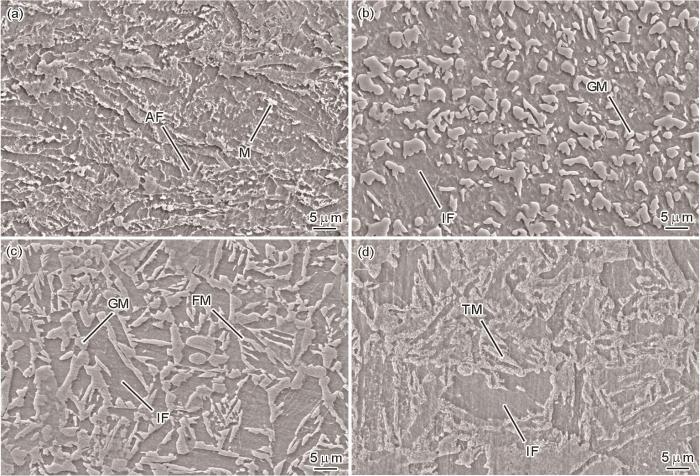
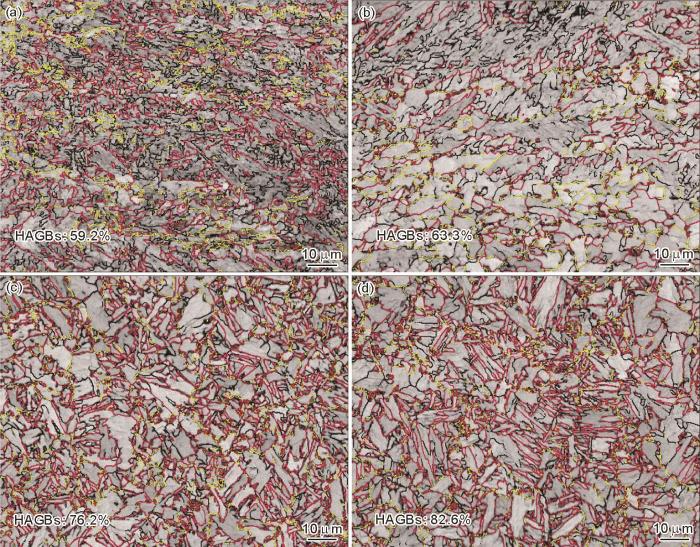
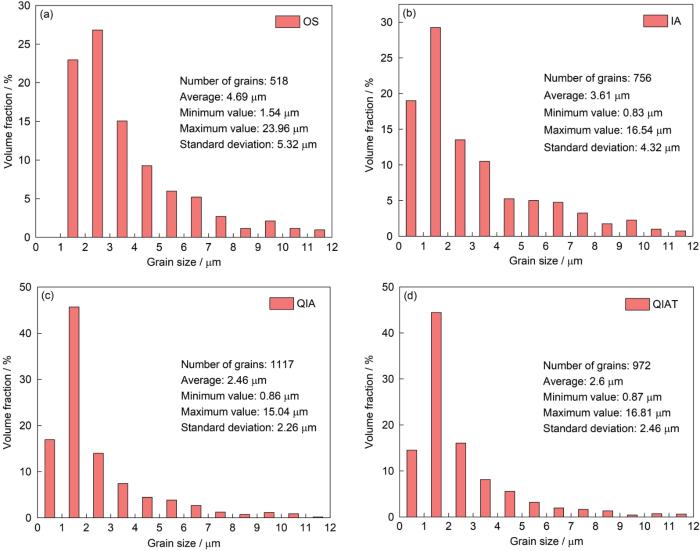
... 图4给出了几种试样的微观组织形态和边界分布的带衬度.从图4可见OS试样微观组织中的层状结构和含量较高的小角度晶界(图4a),IA和QIA试样中的层状结构有所消失且小角度晶界的含量降低(图4b、c).IA和QIA试样中GM和FM的形成可能源于逆奥氏体相变形成的球状和针状逆转变奥氏体的冷却.根据两种M的组织形貌和生成位置,球状逆转变奥氏体在IF的晶界处形核,针状逆转变奥氏体在块状和板条边界形核[31,32].由于IA试样没有经过奥氏体均匀化和水淬,在临界热处理时没有块状和板条边界,最终的组织中没出现FM.根据取向偏差(θ),晶界可分为黑线(5° < θ < 15°)、黄线(15° < θ< 45°)和红线(θ > 45°)3种类型.其中θ > 15°的晶界,称为大角度晶界(High angle grain boundaries, HAGBs).对比3种热处理态和原始态组织可见,热处理后HAGBs的密度比原始态组织的高.这种情况,与临界热处理使晶粒细化有关. ...
Effect of heterogeneous microstructure on refining austenite grain size in low alloy heavy-gage plate
1
2020
... 图4给出了几种试样的微观组织形态和边界分布的带衬度.从图4可见OS试样微观组织中的层状结构和含量较高的小角度晶界(图4a),IA和QIA试样中的层状结构有所消失且小角度晶界的含量降低(图4b、c).IA和QIA试样中GM和FM的形成可能源于逆奥氏体相变形成的球状和针状逆转变奥氏体的冷却.根据两种M的组织形貌和生成位置,球状逆转变奥氏体在IF的晶界处形核,针状逆转变奥氏体在块状和板条边界形核[31,32].由于IA试样没有经过奥氏体均匀化和水淬,在临界热处理时没有块状和板条边界,最终的组织中没出现FM.根据取向偏差(θ),晶界可分为黑线(5° < θ < 15°)、黄线(15° < θ< 45°)和红线(θ > 45°)3种类型.其中θ > 15°的晶界,称为大角度晶界(High angle grain boundaries, HAGBs).对比3种热处理态和原始态组织可见,热处理后HAGBs的密度比原始态组织的高.这种情况,与临界热处理使晶粒细化有关. ...
Orientation gradients and geometrically necessary dislocations in ultrafine grained dual-phase steels studied by 2D and 3D EBSD
1
2010
... 图5给出了不同制度热处理后这种风电钢微观组织的局部取向差(Kernel average misorientation, KAM),可见位错的演化[33].从图5a可以看出,OS试样的KAM图中位错密度最高.其原因是,TMCP热处理的轧制阶段使试样产生加工硬化,在原始态试样中产生了大量位错,使位错密度提高.从图5b、c可见IA和QIA试样中IF、GM和FM的显著KAM值变化,表明显微组织中的位错分布不均匀.与GM和FM相比,IF中的位错密度更低.从图5d还可见,回火处理后的QIAT试样KAM值的分布更加均匀,且QIAT试样中M的KAM值变得更低.这表明,回火后的GM和FM中位错密度因经过回复阶段而降低. ...
Effect of microstructure on the yield ratio and low temperature toughness of linepipe steels
1
2002
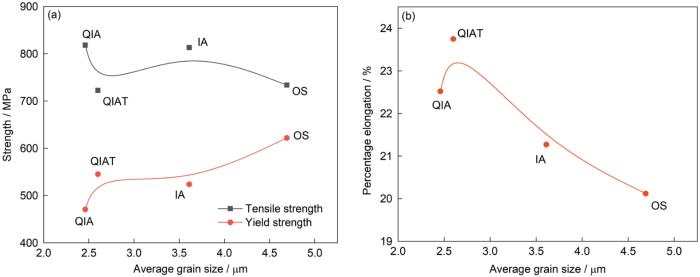
... 另外,临界热处理后的IA试样,其强度和塑性也发生了明显变化,YS降低到524 MPa,UTS提高到813 MPa,断后伸长率为21.27%,均匀延伸率为10.27%,断面收缩率为60.07%.与试样IA的拉伸性能比较,QIA试样淬火后再进行临界退火处理,使其YR更低,且其UTS变化不大.这个结果,应该与晶粒细化有关.与QIA试样相比,QIAT试样的YS更高,但是UTS有所降低而与原始态的UTS相差不大,但是其塑性有较大的提高.这表明,临界退火后再进行中温回火可使其塑性性能较好[34].从图6可见,OS、IA和QIA试样的工程应力-应变曲线没有出现屈服平台,而QIAT试样的曲线出现了屈服平台.这表明,QIAT试样断裂时工程应变最大,塑性最高. ...
Contribution of grain boundary misorientation to intragranular globular austenite reversion and resultant in grain refinement in a high-strength low-alloy steel
1
2020
... 图9示意性地给出了非均质热处理过程中风电钢微观组织的变化.对OS试样进行IA热处理时,加热至(α+γ)两相区并保温后基体组织转变为IF,并在IF的晶界交集处非均匀形核,生成了不规则的团状奥氏体(γG).碳和其它合金元素在体心立方(bcc)和面心立方(fcc)相中的化学势不同,使其在两相间发生再分配.经过WC后,团状奥氏体转变为强度较高的GM.在此过程中,不仅生成了高强度的GM,还因非均匀形核细化晶粒而产生了更为细小的微观组织.在IA前进行淬火(QIA),使试样先完全奥氏体化(γ),在随后的水冷时产生全马氏体/贝氏体组织(M/B),临界退火后在M/B的晶界交界生成团状奥氏体.但是,M/B的块状和板条晶界也会成为非均匀形核点位并生成一定取向的针状奥氏体(γA)[35].这在一定程度上增加了非均匀形核的数量,使QIA试样的晶粒更细小.随后进行的水冷,使针状奥氏体转变为FM.QIA热处理后进行的中温回火(QIAT),使试样中的M转变为TM并析出了纳米级碳化物. ...
Dislocation theory of slip geometry and temperature dependence of flow stress in B.C.C. metals
1
1966
... 从QIAT试样的拉伸性能(表1)可见,其YS比QIA试样的高,但是UTS较低,使YR急剧增大到0.75,是其在350 ℃回火时微观组织回复所致.YS的变化,与塑性变形早期的位错运动有关[36].在回火过程中位错回复,碳化物析出并且M中的位错与碳化物钉扎在一起,需要更强的应力才能引发位错运动,其结果是YS的提高.拉伸强度在很大程度上取决于各相的强度,IA和QIA试样中出现的大量高强度M,使IA和QIA试样的UTS较高.而QIAT试样的UTS因其在回火过程中软化而降低,两者的同时变化使QIAT试样的YR较高. ...
Physics and phenomenology of strain hardening: the FCC case
1
2003
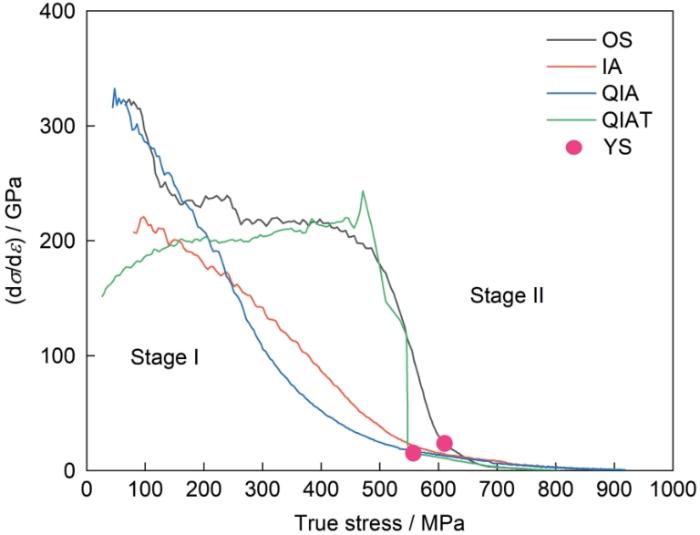
... 为了更好地理解热处理试样的屈服行为,用扩展的Kocks-Mecking(K-M)曲线描述瞬时加工硬化率(λ, dσ/dε)与真应力之间的关系[37].达到拉伸强度前有两个阶段:第I阶段是基体位错弯曲的滞弹性可逆行为引起的λ的逐渐衰减,第II阶段是随后塑性变形过程中位错的积累引起的向塑性区的转变.图12给出了4个试样的扩展K-M曲线.OS试样的曲线出现了第I阶段和第II阶段之间的明显过渡(以红点标记),过渡点的出现与试样的屈服同时发生.但是,IA和QIA试样的曲线出现了λ连续衰减,从第I阶段到第II阶段没有明显的过渡.这表明,屈服是连续的,是微观组织的不均匀性所致.IA和QIA试样中有一定量的IF,扩展K-M曲线第I阶段的λ比II阶段下降得快,表明IF的屈服应力水平低于M,其屈服先于M.因此,IF的存在使IA和QIA试样在拉伸变形期间的初始屈服行为和随后的加工硬化发生了变化.这表明,IF的影响使IA和QIA试样的YS迅速降低,并且使临界热处理后的试样内出现非均匀形核,生成了大量细小晶粒组织而使UTS提高.两者的共同作用使IA和QIA试样的YR较低.由于QIA试样中出现了具有取向尖角的FM,在软相发生塑性变形时容易形成应力集中.同时,由图5中的KAM图可见,QIA试样中的位错密度比IA试样的位错密度低,在一定应力下QIA试样先发生屈服.这表明,虽然QIA试样的平均晶粒尺寸比IA试样的小,但是FM存在和更低的位错密度使QIA试样更早进入屈服阶段,YR也比IA试样的低.QIA试样的回火,使其扩展K-M曲线出现明显的阶段I向阶II的过渡并出现了屈服拐点.λ的突然变化,可归因于回火过程中纳米碳化物的析出和基体中位错的回复. ...